Light is one aspect of the Universe that, for most people, holds a deep and noticeable value in everyday life, helping them to navigate, learn from, and connect with the world around them. Yet it’s not particularly difficult to imagine life without it. After all, many nonhuman animals live in lightless environments. However, as Gideon Koekoek, an associate professor of physics in the research group Gravitational Waves and Fundamental Physics at Maastricht University, discusses in this lecture at the Royal Institution in London from April 2025, such a reality would be impossible. Koekoek pairs an exploration of fundamental physics with a series of experiments, making fascinating connections that build towards the conclusion that light in our Universe occurred not by chance, but through inevitability.
Photo by Maxime Valcarce/Unsplash
videoQuantum theory
The physics revolution that started with the flicker of a lightbulb
4 minutes

videoCosmology
Tiny, entangled universes that form or fizzle out – a theory of the quantum multiverse
11 minutes

videoComplexity
A radical reimagining of physics puts information at its centre
13 minutes

videoAstronomy
Visualisations explore what the deep future holds for our night sky
6 minutes
videoCosmology
The mysterious ‘something’ behind the accelerating expansion of the Universe
3 minutes
videoPhysics
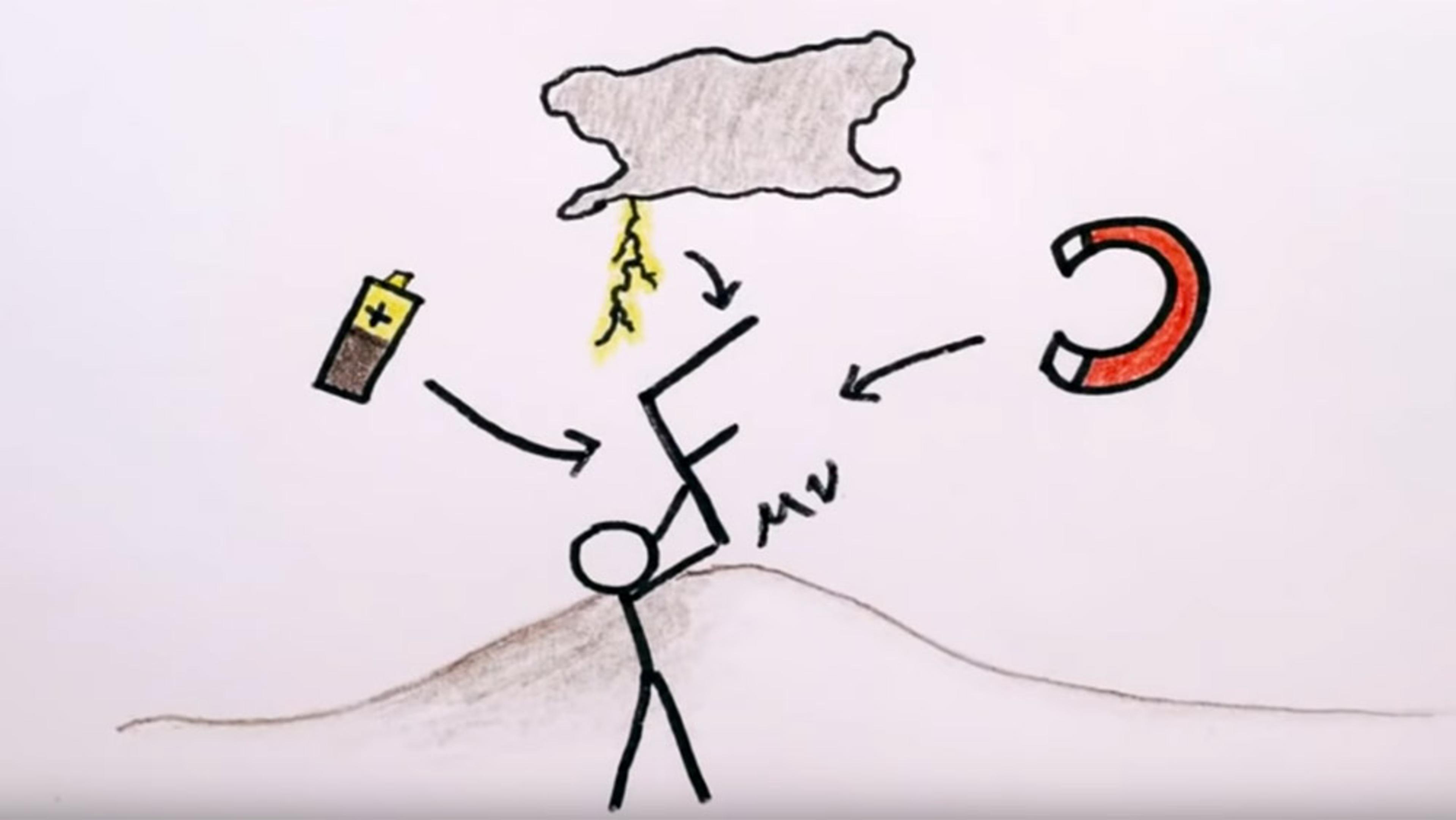
How two scientists built a bridge between Newton and Einstein in ‘empty’ spaces
5 minutes