Listen to this essay
24 minute listen
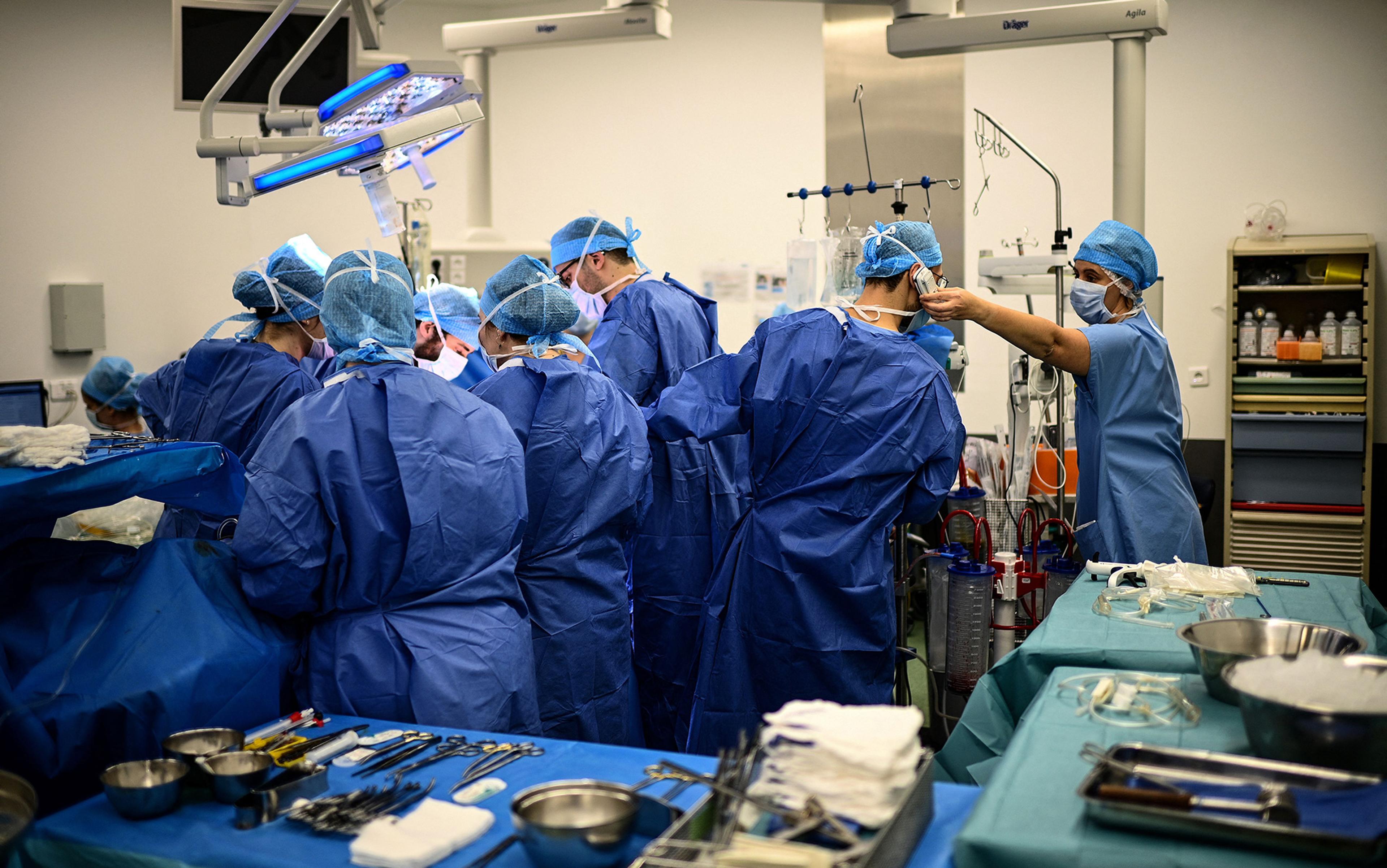
I suffered from a bad conscience before the case even began. My patient was in his late 70s, partially blind from narrow-angle glaucoma. He had undergone a colonoscopy a few days before and now needed emergency abdominal surgery for a perforated bowel. Before his colonoscopy, he’d had a slight fever, which the surgical team – including myself, the anaesthesiologist – had dismissed, but which later proved to be an early sign of sepsis. Two voices now vied for supremacy in my head. The first asked: Why did you overlook his fever? The second replied: How could I have foreseen what would happen? The first shot back: A smart doctor is only a smart doctor if he does foresee things. It doesn’t take a smart doctor not to foresee things. Anyone can do that.
The man was on several intravenous drugs called ‘vasopressors’, which cause the heart to eject more blood and the small arteries to squeeze down, thereby raising blood pressure. Without the drugs the man would die.
I told the man my plan was to place a breathing tube in his windpipe while he was still awake, as the sedation normally used to put patients to sleep would cause his blood pressure to crash. He offered no response. His eyes sitting in his grey, haggard face were remote and sad, as though overflowing with all the mute loneliness that preys upon a solitary individual close to death inside a hospital.
I numbed his throat with local anaesthetic. His sorrowful glance was filled with entreaty as I inserted the flexible scope into his mouth. When I manoeuvred the scope past his throat, he jerked his head from side to side. As I went deeper, he bucked with a pained expression on his face, squinting his eyes and contorting his mouth, his illness having prevented me from numbing his windpipe beforehand.
Was my inflicting of pain unethical? The field of bioethics arose in the 1960s to answer such questions. But it had nothing new to say in my case. The philosophy of utilitarianism, which justifies inflicting pain on a sick, speechless patient to save that patient’s life, had conquered everyday medical practice long before bioethics came along.
Bioethics has surprisingly little to offer practising physicians in general. Other than the principles of informed consent and patient confidentiality, the field has had no impact on my three-decade career, nor on the career of any other anaesthesiologist I know. Surgeons have told me something similar. We took the Hippocratic Oath upon graduating from medical school, but we already had a firm sense of right and wrong before then. My own code of ethics drew, cafeteria plan-like, from a variety of sources: a secularised version of Judeo-Christian teachings such as ‘respect human life’ and ‘be kind’, notions that undergird most civilisations; a strong belief in individual freedom and agency, courtesy of my southern California upbringing; an Aristotelian sensibility that perfect justice is an abstraction, without meaning in the real world; and the pragmatic view that ‘moderation in all things’ is a wise dictum to follow, when you can.
When my colleagues and I ran into moral dilemmas our own codes of conduct couldn’t resolve, it was often technology – not bioethics – that supplied the workaround. Special ‘holding’ bags could keep blood connected to the bloodstream and make emergency transfusions acceptable to Jehovah’s Witness patients. Translation apps, meanwhile, could spare me the prospect of urgently anaesthetising a non-English-speaking patient before I understood their medical history.
In fact, during all my years practising medicine, I never met a bioethicist at my hospital, even after the 1980s, when bioethics launched a specific focus on ‘clinical bioethics’ to advise doctors in their daily practices. In that first decade, only 1 per cent of US hospitals had a clinical bioethics committee; today, an estimated 97 per cent of US hospitals have one. Yet clinical bioethics, like general bioethics, which covers all the life sciences, tends to focus on obscure issues, such as human subject research or the appointment of healthcare proxies. Often, a bioethics committee sets broad policy for the hospital without focusing on any individual patient case.
Inflicting severe pain on a patient creates a kind of moral residue for a physician that begs for relief
Personnel accounts for some of bioethics’ irrelevance for practising physicians. The field has long been under the control of non-physicians who focus – understandably – more on patients’ rights than on doctors’ inner experience. A hospital bioethics committee, for instance, typically has a doctor on it, but other members might be nurses, lawyers, sociologists, clergymen or even just laypeople. In fact, anyone can call themselves a bioethicist; it is an unregulated field without formal certification for the title. Non-physician bioethicists tend to overlook doctors’ complaints of ‘burnout’ and their struggle to preserve their decision-making independence inside large companies.
As a result, bioethics tends to ignore the hospital rooms where a doctor’s bad conscience lives. Inflicting severe pain on a patient creates a kind of moral residue for a physician that begs for relief – something utilitarianism alone cannot supply. A routine intubation on an unconscious patient may prompt, at most, quiet professional satisfaction; a difficult one performed successfully can arouse in a doctor the feeling athletes experience when registering a sports record. An awake intubation is different. It means passing a breathing tube into a conscious person’s windpipe, a procedure that can mimic suffocation. And when the airway cannot be numbed beforehand, the doctor doesn’t just perform the act; the doctor absorbs it – feeling the event deep within.
Recently, bioethics has paid more attention to what it calls ‘moral distress’, a concept created with the launch of clinical bioethics to capture what doctors experience when their consciences feel violated, comparable to post-traumatic stress disorder. Yet the field still doesn’t penetrate the doctor’s psyche all that deeply. Typically, it focuses on moral distress stemming from insufficient resources, as during the COVID-19 pandemic, when doctors had an inadequate number of ventilators amid high patient volume, or when cost controls prevent doctors from prescribing patients the best medication with the fewest side-effects. It is why the field so often emphasises healthcare re-organisation as a corrective, presuming that, with more resources available, doctors will face fewer morally compromising situations. Still, nothing about a lack of resources is unique to the plight of doctors.
Bioethicists say ethics is ‘central to a physician’s identity’, and that ethics is about compassion, empathy and virtue. But most doctors think quite differently. They think being a doctor is first and foremost a burden because the doctor’s moral sense and civilised sentiments are always playing defence against the savagery of physical existence.
In the operating room that day, I did not see myself as the compassionate and empathetic caregiver portrayed in bioethics, but as an ordinary worker doing a dirty job the best he could; not as someone on a higher plane, but of this world; not super-earthly but the sum and substance of all that is earthly. I tried to imagine myself functioning more vigorously than the average person; that my senses were keener; that they saw and heard more acutely and more consciously, enabling me to keep my patient’s pain to a minimum – not unlike the 19th-century surgeon, who, when performing an amputation before the age of anaesthesia, prided himself on being fast. I did not see myself as inspired, idealistic or especially principled. Instead, I saw myself as thoroughly human, working in reality, only it was reality raised to the nth power.
Can bioethics be made more relevant to everyday physician practice? With my difficult case uppermost in mind, I doubt it.
I passed the breathing tube. Before connecting it to the ventilator, I stared at the man’s face. It reflected the horror he had just gone through. It also expressed bewilderment and a tense, agonising question – a foreboding of fresh misfortune, inevitable and unavoidable, as though expecting a blow that he wanted to turn aside but could not.
I turned the dial on the anaesthetic gas canister to a low dose. The man grew still. When I turned the dose a notch higher, his blood pressure fell dramatically, so I quickly dialled back. It was clear that his fragile cardiovascular system would tolerate very little anaesthesia.
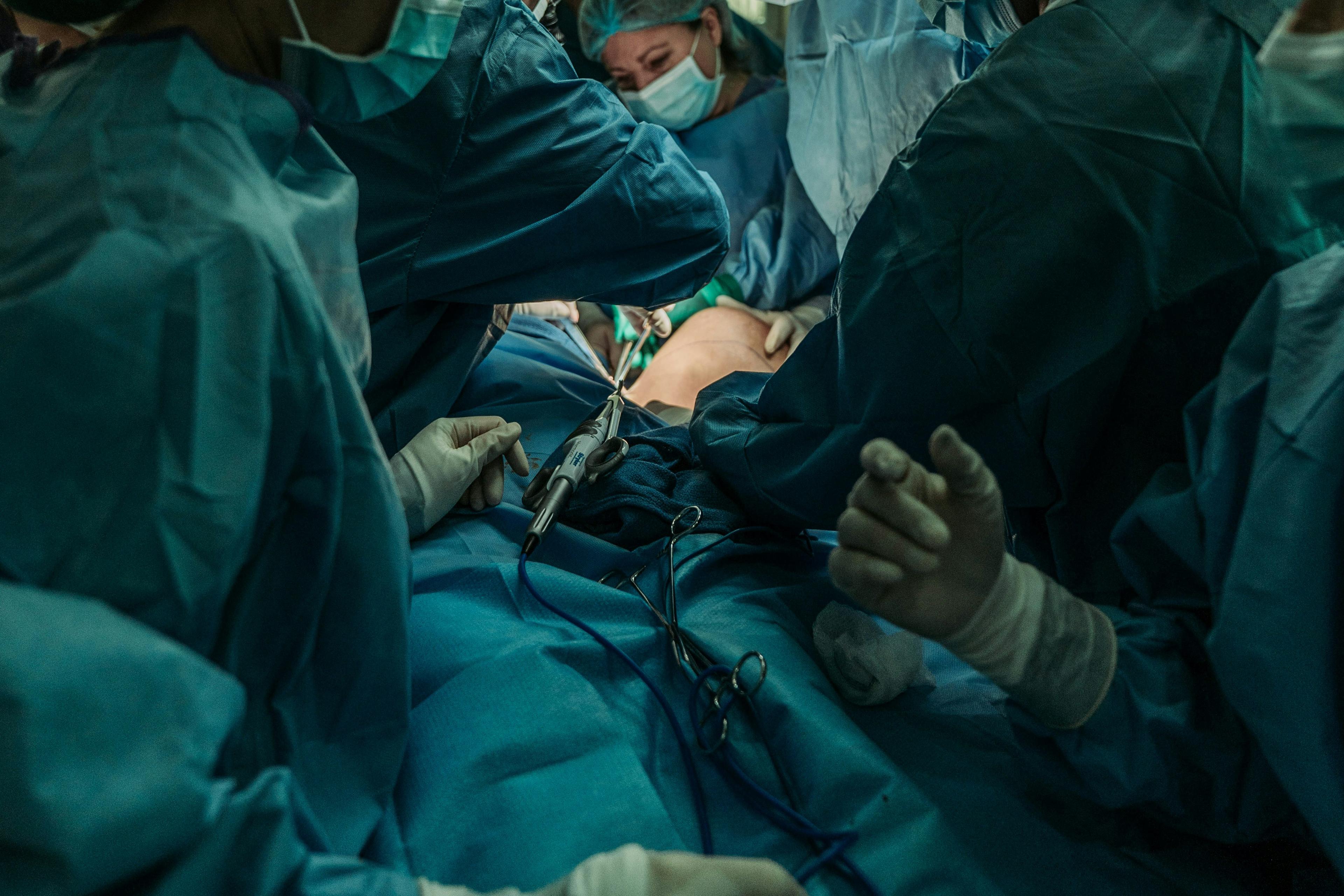
The surgeon cut. Quickly, the man’s bare abdomen lost the familiar appearance of human flesh. Each time I tried to give more anaesthetic gas, the patient’s blood pressure collapsed, at one point leading to cardiac arrest. It was almost as if his body needed to feel pain to live. It needed the outpouring of adrenalin caused by his pain to constrict his blood vessels and accelerate his heart to maintain blood pressure.
I had paralysed the patient with a muscle relaxant, tying a tourniquet around his left forearm in advance so that his left hand would move if he was still conscious. Now, I placed a second intravenous line in his left wrist. Shockingly, I felt the man’s unparalysed fingers find my hand and squeeze it. In the past I had received approving squeezes from patients who wanted to say thanks, or sometimes an anxious, childlike squeeze designed to allay the patient’s own anxiety. But this squeeze had desperation in it.
While ethics committees in some hospitals offer consultations, such services are rarely available 24/7
Taping a patient’s eyes shut is routine in all general anaesthetics to protect against eye injury. I had not yet done so, as the man’s eyes were closed naturally. I lifted the lids and studied them. They remained unchanged in position and committed themselves to nothing, but when I looked down into them, I thought I saw the swift passage of thought. The eyes see! Or so I feared. I debated whether to tape them shut or leave them open. To be in horrible pain and unable to open one’s eyes seemed awful, like a surgical version of being buried alive. Nevertheless, I taped them.
I was a wreck. Not surprisingly, clinical bioethics was nowhere to be seen. While ethics committees in some hospitals offer consultations, such services are rarely available 24/7. The committee at my hospital met just once a month.
Yet even if a consultant had been available, the field’s abstract principles would have been useless to me. The concept of principlism refers to the four core principles outlined in the (now classic) textbook Principles of Biomedical Ethics (1979) by Tom L Beauchamp and James F Childress: patient autonomy, beneficence, non-maleficence, and justice. These principles have canonical status in clinical bioethics. Yet doctors in everyday practice know the real god of medicine is not a principle, nor even science, but chance. Sometimes, they may seduce themselves into thinking medical practice can be a smooth ride along polished rails, but deep down they know that chance will inevitably assert itself and ruin their day. When it does, they know they will stumble, scratch their heads, cut corners, flail, fail and worry about getting sued – while still being very respectable doctors.
The four principles represent prototypes of upright behaviour and are meant to awaken higher and better feelings in doctors. Vain the desire, vain the attempt, for often the principles cannot be squared with one another – an awake and painful intubation, for instance, pits the principle of beneficence against the principles of non-maleficence and autonomy. During medical emergencies, these idealised principles are like weak reeds in a storm, bending right and left, having no wish to be broken, useless as a foundation, and waiting for calm so they might rise again, and pretend to be strong and true.
The whole notion of bioethical progress sometimes seems overrated. The first chapter of Principles of Biomedical Ethics situates the field historically and gives a sense of the narrative about to unfold. Bioethics, the book suggests, is climbing an invisible ladder to better things, leaving behind the rank brutality of ancient days; the inequities of the 19th century, when only one of the four principles, beneficence, was stressed; and the selfishness of the first half of the 20th century, when professional codes of conduct protected doctors more than patients. But on that day in the operating room, I looked backward rather than forward – the very antithesis of the idea of progress. I imagined all the doctors who came before me, who faced similar pressures, and who also felt alone with the greatness of their trouble. I felt myself the representative of what for all intents and purposes is a dynasty – the medical profession: continuous, not in blood, but in its conception of duty in the face of plights, messes and travails.
The anaesthetic dose reached zero. At any moment, I thought, my patient would rise and face all of us who were participating in reducing his body to a bloody pulp without anaesthesia. What would he do if he could move? He would cough, rapidly and vainly, trying to expel his breathing tube. Gritting his teeth, he would try to push the scalpel out of his stomach. He would be wild and terrifying; he would attack all of us. But he could do none of these things.
There was one drug left for me to try: scopolamine. When given intravenously it scrambles people’s minds without affecting blood pressure. But it is contraindicated in patients with narrow-angle glaucoma, as it can lead to a dangerous rise in intraocular pressure. The man was already partially blind from the disease. If I gave him the drug, I risked blinding him completely.
Should I give it, I asked myself? All the man’s accounts with consciousness were done. There was nothing for him to think about and it was torture for him to go on. What he needed most was sleep. Trouble was, that sleep would not come. I could not give it to him. There was something mean and perfidious in this, I thought, when a man’s whole being longs for sleep, but sleep merely taunts him and lures him. Then again, maybe the man had enough residual anaesthesia to be unaware of events, or at least be unable to remember them. Sick elderly patients need very little for this to occur. Maybe his surgery wouldn’t last much longer, I thought. ‘A moment’s pain can be a lifetime’s gain,’ Leo Tolstoy once suggested in a short story. Then again, what pain! And yet, to go blind permanently…
I stared at the man, realising how powerless I was to help him. Not for a second did I cease to feel my responsibilities toward him, but it seemed that I could do nothing but bring him misery. I tried to take myself in hand, to concentrate on the practical and necessary decision I had to make, but my thoughts wandered and grew confused, all while imagining the patient whispering to me: ‘Why this long, endless road? Why this pain, for which I have no use now? How sore I am and how I long to sleep. What can you want of me when I want to sleep so much?’
The deeper question is how bioethics came to be so irrelevant to matters of conscience?
At that moment, bioethics had nothing useful to say to my conscience or to help me reach a decision, as matters of conscience are not really its business. As Ted Bailey, an experienced physician and bioethicist working at a hospital in Maryland, told me in regard to my situation: ‘Ethics consult would not be needed or add anything, as this choice falls cleanly in a space of ethically permissible medical discretion on the part of the medical provider.’ The decision how to proceed, he continued, ‘is a matter of relevant knowledgeable medical expertise rather than ethics’.
He is correct. I was thrown back on my own patchwork code of ethics, which proved to be as incapable as official bioethics in rescuing my conscience. What was the ‘moderate’ position – the Aristotelian mean – when forced to choose between risking a patient’s eyesight and risking his feeling horrible pain? At the very least, there was no ‘moderate’ dose of scopolamine.
Yet the deeper question is how bioethics came to be so irrelevant to matters of conscience? Bioethics does not demand a moral state of being in doctors; it asks merely for a moral kind of behaviour, where doctors act ‘as if’ they were motivated by bioethical principles. Bioethics assumes the two are indistinguishable, and often they are: if resources grew unlimited, doctors would happily give everyone in need a ventilator or the most expensive drug.
But moral state and moral behaviour are not always indistinguishable. For example, some bioethicists recommend doctors get a child’s assent before sticking them with a needle, out of respect for the child’s autonomy. They assume doctors feel badly when they violate this standard, and many doctors follow the standard ‘as if’ they believed in it. But they don’t believe in it all that much, and on those occasions when they must give the shot without the child’s assent, because the child is being difficult, they feel no great moral distress, although they may feign doing so. Here, their behaviour is not truly moral in the spiritual sense of the term; all they need guard against is being detected in a breach of the moral code, which they take great pains to avoid by apologising after giving the shot, or by relying on technology to avoid having to do so altogether.
Doctors can feel unmoored even when they have acted correctly, because clinical rightness can require doing something that feels terrible
This disjunction has haunted ethics since its inception centuries ago as a substitute for the teaching of religion. By creating a science of how people ought to behave, ethics became a new way of keeping law and order. But ethics, unlike the Church, did not insist upon any kind of inward moralisation among its members, finding it enough to demand a particular type of conduct.
The new approach influenced everyday language. Most people today think the words morality and ethics are interchangeable. But the latter was once concerned with behaviour in relation to community standards, while the former was concerned with how people felt about their behaviour in relation to certain inner values. When ethics eclipsed religion as the primary method for policing behaviour in secular life, morality became just another word for ethics, and people were presumed to be both moral and ethical when they behaved correctly, independent of how they felt when they did.
Thus, ethics evaded the core of the moral problem: how a person feels when acting. How far a person’s conduct was truly moral in the spiritual sense of the term remained his or her own private affair.
Bioethics inherited this outlook. The result is that doctors can feel unmoored even when they have acted correctly, because clinical rightness can require doing something that feels terrible. You may have saved a life and still be haunted by the means – like I was that day, when my patient went through surgery with almost no anaesthesia.
In the end, I decided how to proceed based on my personal impulses: I thought about what I would want if I were the patient. Scraps of philosophy from my own code of ethics, none of them having any special claim on truth, flitted through my mind. I even thought about Tolstoy again, who wrote that just as there is a limit to pleasure, there is also a limit to pain; the victim in pain just swoons into unconsciousness.
After endless back and forth, I decided against giving scopolamine. But I suffered from an uneasy conscience, as one might expect in someone who has no clear moral guide to follow in a desperate situation.
The operation finished 20 minutes later.
The next day, I wandered over to the intensive care unit to check on the man. I wanted to find out if he remembered the pain of his surgery. If he did, he would probably scream at me, I thought. Or maybe he would spare me his anger and lie to me, to protect my feelings. Either way, I was afraid of what he might tell me. If he told me lies, I would hate his lies; if he told me the truth, I would hate his truth.
He had been moved to a corner of the room, still intubated and unable to speak. Although he had made it through the operation, the wasting process going on internally had not stopped. A dull, grey weariness still covered his face, like a mist.
At first, I tried to enliven him. I told him how hard the surgical team had worked on his case. Some very sick patients take delight in hearing how doctors live their lives. They enjoy our pleasures, commiserate with our fatigue, and take part in our struggles. In that way, they don’t feel left out of the game of life; we doctors are simply playing it in their place. They enjoy the role of being alert onlookers.
I looked into his eyes. Was he looking back at his tormentor? Did he hate me?
But my patient’s look remained cold, as one who is wholly indifferent to life. Trembling on weak feet, I asked him if he remembered anything from the day before, telling him to nod his head if so. His face twitched nervously. It seemed like a ‘yes’.
‘Do you remember… any pain?’ I asked.
He remained still.
I looked into his eyes. Was he looking back at his tormentor? Did he hate me? In the depths of his cold stare lay the secret of his experience the day before. He would not, or could not, reveal it.
The man died six days later.
When doctors start out in their careers, they often see medicine as a profession of uncomplicated goodness. The belief helps sustain them through long hours and steep learning curves. If they do not think of medicine in this abstract form, they render it tangible to their senses, and anthropomorphise it; in the place of an idea, they conjure a certain physician prototype, and faithfully try to model themselves on this substitute. But eventually they learn that medical practice is not so clean or pure. At first, they accept this fact only grudgingly; they think they are going to a good place but by mistake have opened the wrong door. They still try to imagine the profession as what it is not; in a kind of split, one part of the mind insists on its own purity while, in another, the accumulation of moral distress forces them to surrender to hard reality.
Why does bioethics have so little to offer doctors who face this problem every day? The field is seduced by its own rationality, constrained by a narrow professional culture, and buoyed by optimism about what it can accomplish. It imagines that everyday medical practice can be governed by abstract theory, that the commotion and uncertainty of clinical life will yield to tidy systems, and that medicine’s no-win situations can be resolved by calculation. In that sense, a medical culture built on bioethics alone is built on sand.
Meanwhile, doctors lean on their common sense, the tradition of their profession, a touch of cynicism, and the mob of their own personal impulses to navigate matters. For me that day, I had nothing else to lean on, beyond the bleak consolation that I had been unlucky to draw the case at all.