Listen to this essay
24 minute listen
Psychopathic personality disorder – or psychopathy as it is commonly called – is one of the oldest and most researched mental health diagnoses. The first account of psychopathy seems to be a short text from 1786 by the American physician Benjamin Rush who described a mysterious medical condition that he called anomia – and later moral derangement – where people allegedly lost the ability to distinguish between good and evil. Although his work is highly speculative, it sketched out the idea of ‘the psychopath’ in a way that could be passed on to a scientific audience: as a biological disorder so extreme that it impairs the innate human capacity for moral attitudes and prosocial behaviours.
In modern science, psychopaths are typically described with reference to concrete symptoms, like a lack of empathy, remorse and conscience, or more explicit behavioural signs, like predatory violence, pathological lying and impaired impulse control. As the prominent psychopathy researcher Robert Hare writes in his book Without Conscience (1993):
Psychopaths are social predators who charm, manipulate, and ruthlessly plow their way through life, leaving a broad trail of broken hearts, shattered expectations, and empty wallets. Completely lacking in conscience and in feelings for others, they selfishly take what they want and do as they please, violating social norms and expectations without the slightest sense of guilt or regret.
The psychopath has also become a well-known figure of fascination in popular culture, frequently portrayed in bestselling novels and cinematic thrillers. One of the more jarring examples is the assassin Anton Chigurh, played by Javier Bardem in the movie No Country for Old Men (2007). Utterly deprived of any emotional resonance, Chigurh wanders through the arid Texas landscape as he slaughters innocent people like cattle. Though characters such as Chigurh are, of course, works of fiction and not serious attempts to portray real people clinically diagnosed with psychopathy, Chigurh-like characters still animate many of the central traits associated with psychopathy, such as emotional detachment and moral emptiness.
However, there’s a problem with this idea of psychopathy. While it has been researched across hundreds of empirical studies – especially since the explosion of research in the late-1990s – there is still remarkably little evidence that corroborates popularised claims about the diagnosis. Despite enthusiasm among researchers in the 1990s and 2000s, when a few studies seemed to validate theories about psychopathy, the past two decades have been sobering. Today, virtually every single claim about psychopathy has been either thoroughly refuted or failed to find empirical support in experimental settings. Psychopathy may not exist at all.
Consider one of the most repeated tropes about psychopaths, that they are incapable of mirroring or reading other peoples’ emotions: they lack empathy. The problem with this view is that science tells a radically different story. When people diagnosed with psychopathy participate in empathy experiments, their performance is entirely indistinguishable from normal controls.
The most compelling evidence comes from a recent systematic review of empathy research my team conducted, which included a total of 66 studies involving 5,711 persons clinically assessed for psychopathy. We found that the results were ‘overwhelmingly null findings’ (89.11 per cent of all tests). That is, statistical analyses cannot tell the difference in performance between psychopathic vs non-psychopathic persons. We also found that high-quality studies – those using more rigid statistical methods – had an even higher null-ratio of a whopping 94.77 per cent. In behavioural scientific experiments, where datasets are presumed to be rife with false positives, this is arguably as close as you get to proving a negative: people diagnosed with psychopathy do not have empathy deficits.
Consider another well-trodden claim that psychopaths lack emotions. This claim is as old as the idea of psychopathy itself, however it was the psychiatrist Hervey Cleckley who popularised it through his book The Mask of Sanity (1941). Cleckley hypothesised that psychopathy was essentially a neurological disorder of the affective system, causing abnormally shallow emotions. What made psychopathy peculiar was that those who were affected by the disorder could hide or mask their disability, coming across as if they were normal. But, to Cleckley, this is just a façade covering up a barren inner emotional life. In many ways, the Chigurh character effectively captures this aspect of Cleckley’s conception of psychopathy.
In the vast majority of tests, no clear distinction can be made between psychopaths and control groups
However, most researchers have long given up on this idea too, rendering it little more than a myth. There has never been any clear evidence to support it. A person clinically diagnosed with psychopathy might appear as if they are lacking emotions, but once these patients are subjected to careful analysis using technology capable of measuring physiological markers correlated with emotional reactions – like skin conductance, heart rate, brain activity, etc – the data tell a different story.
There were some early studies – like David Lykken’s 1957 experiment using skin conductance technology to gauge emotional reactions – that analysed their data in ways that made it look like they had found shallow emotions in psychopaths. And more such studies surfaced in the 1990s, like the widely cited 1993 paper by Christopher Patrick and colleagues that again seemed to corroborate the idea.
But scrutinise the methods and results of these studies, and it becomes clear that the evidence is vanishingly thin and unpersuasive. There are at least 27 studies published since 1980 that directly test the emotional-response system in those diagnosed with psychopathy using common psychophysiological technologies. None of these studies presents evidence that suggests deep-seated impairments. In the vast majority of tests performed across these studies, no clear distinction can be made between psychopaths and control groups. It’s essentially a huge pile of null findings. The consistent failure to corroborate the hypothesis of shallow emotions has meant researchers virtually stopped testing it: there is only one psychophysiological study that has been published in the past decade.
Just about every claim made about psychopathy follows the same path. It begins with one or two studies that find tentative evidence to support some common claim. But a few years later, there is a torrent of studies that either fail to corroborate earlier results or straightforwardly falsify them. This trajectory has held for other claims, such as that psychopathic persons are extraordinarily dangerous, that they have impaired impulse control, that they are unresponsive to cognitive behavioural therapy, that the construct may have genetic biomarkers, or that psychopathy is associated with structural and functional brain abnormalities. Name something you’ve heard about psychopaths, and researchers will show you that it’s little more than a dubious speculation. Why has it proven so difficult for experimental psychologists to corroborate the idea of the psychopath?
Before trying to answer this question, it is important to reflect for a moment on how puzzling this situation truly is. In the 2000s, the field was frequently framed as one of the most progressive and solid research paradigms in clinical and forensic psychology. Today, the field is increasingly defined by its history of exaggerated claims and uncorroborated hypotheses. And notice that psychopathy has historically been described as a disorder associated with extreme psychological traits. If psychopaths really had such extreme traits, it should have been relatively easy for experimental psychologists to measure and document them. That they have continuously failed to do so is, to put it bluntly, weird.
Although more and more researchers are discussing what might explain this impasse, the fact is that there is no clear consensus in sight. However, two explanations have been discussed at some length in academic research circles.
The first and perhaps most common explanation is that psychopathy – similar to other personality disorders – is just too difficult to study with the tools and technologies currently available. Psychopathy may indeed be a personality disorder associated with extreme personality traits – like a lack of empathy and shallow emotions – but our scientific instruments simply do not have the finesse and resolution to capture these traits reliably. Scientists operate with clear methodological limitations when they study personality disorders, and this is reflected in the evidence base.
Many of the studies testing claims about psychopathy are far from unsophisticated
This line of reasoning is widespread in the research literature. It is typically found in the conclusion section of research articles where the authors discuss the challenges to future research, given that they have produced yet another load of evidence that failed to corroborate their hypothesis. In these discussions, the absence of evidence is interpreted not as an invitation to reconsider past claims about the condition, but rather as proof of practical and technological limitations.
One problem with this view is that it makes a mockery of behavioural science, as if it’s a primitive discipline incapable of serious research. The reality is different. During the past two decades there have been substantial methodological and technological advancements in the discipline, and many of the studies testing claims about psychopathy are far from unsophisticated. They employ high-resolution neuroimaging, complex statistical modelling, and well-validated psychometric instruments. If psychopathy truly entails extreme deficiencies of empathy, emotion and impulse control, these traits should have been detected by now. That they haven’t cannot be explained by the limitations of behavioural science.
A second, related explanation for the lack of experimental evidence of psychopathic traits is that researchers have not yet found the right tools to identify ‘true’ psychopaths. This explanation has a long history as part of a constantly resurfacing conversation about how best to define and measure psychopathy, a conversation that contains many different camps, each of which claims to have the proper definition of psychopathy and a tool that readily measures it.
Proponents of this explanation often begin by pointing out that the bulk of scientific research on psychopathy is conducted on samples selected by using the Hare Psychopathy Checklist Revised (PCL-R), easily the most popular instrument to measure psychopathy in clinical and forensic settings. If the PCL-R is flawed, the reasoning goes, studies based on PCL-R samples will then be drawing inferences from the wrong population. At first glance, this explanation seems plausible. If you misclassify individuals in a clinical study – labelling some as psychopathic when they are not – then the resulting data will eventually reflect that. However, on closer scrutiny, this explanation has serious flaws.
Although it is completely legitimate to criticise the PCL-R, the tool has long been regarded by researchers and practitioners alike as the best available instrument for identifying the patient prototype they themselves associate with the concept of psychopathy. In other words, when researchers are using the PCL-R, the instrument is praised for selecting people who appear to match all the trademark signs of the psychopath. And this is really all that a clinical assessment tool does. It assists clinicians in reliably selecting a patient prototype defined by the clinical community.
Now, if you replace the PCL-R with another tool, this alternative tool will still be designed to select (more or less) the same consensus-based stereotype: individuals who seem to have all the traits historically and conceptually associated with psychopathy. And for that reason, it would be wishful thinking to expect that the research output would change dramatically. As a matter of fact, this is also what we see in the literature. Studies that use alternative assessment tools in their sampling procedures have also not corroborated common claims about psychopathy.
So, the central question remains unanswered: why is there so little evidence to support the idea of psychopathy?
An alternative answer to this question that has so far received little attention is the possibility that psychopathy may be an instance of what scientists colloquially refer to as a zombie idea: ideas that have the quality of being intuitively appealing, but the idea itself is essentially a fallacious misconception of reality. Just like zombies, when these ideas have been falsified – shown to be dead ideas – they somehow still manage to stubbornly stick around in the halls of prestigious universities, only to once again infect another generation of young scientists.
There are many historic examples of zombie ideas, such as phrenology, race theory, or the geocentric view of the Universe. What these ideas have in common is that they were all widely accepted by scientists, even for decades after they were thoroughly refuted by scientific research. And this gets to the core of a zombie idea: those who are infected always fail in the strangest ways to realise that the idea is dead. As such, zombie ideas appear to be upheld by strong biases where the idea itself is rarely questioned, even when the scientist who believes in them is faced with obvious evidence that suggests the idea is wrong. Fortunately, zombie ideas are relatively rare in the sciences, but they truly are a peculiar phenomenon.
Consider the case of race theory, the idea that the human species is divided into biologically discrete sub-types called races such as white, Black, Asian, and so forth. To many scientists in the modern era, this idea seemed to reflect a truism about the world. But as biologists discovered DNA and began studying population genetics in the mid-20th century, it became irrefutable as early as 1972, with Richard Lewontin’s famous ‘apportionment’ study, that race theory was simply wrong. However, hundreds of biologists and anthropologists ignored overwhelming evidence and continued to study race theory, many until the bitter ends of their academic careers.
Is psychopathy a zombie idea? While testing and proving that some contemporary idea is a zombie is an extremely difficult task, and probably something that can be done only from the vantage point of historic hindsight, there are at least three aspects that could be interpreted as convincing indicators that psychopathy is indeed a zombie idea.
Most (if not all) serial killers we know of never appear to be clear cases of psychopathy
First there is the problem that scientists have never found persuasive evidence of the existence of psychopaths. We have never convincingly documented individuals with a disorderly psychology that renders them incapable of empathy, emotions, impulse control and so forth. There are, of course, individuals who appear to fit all these descriptors when we engage with them in clinical settings, but that is not the same as them actually being this way.
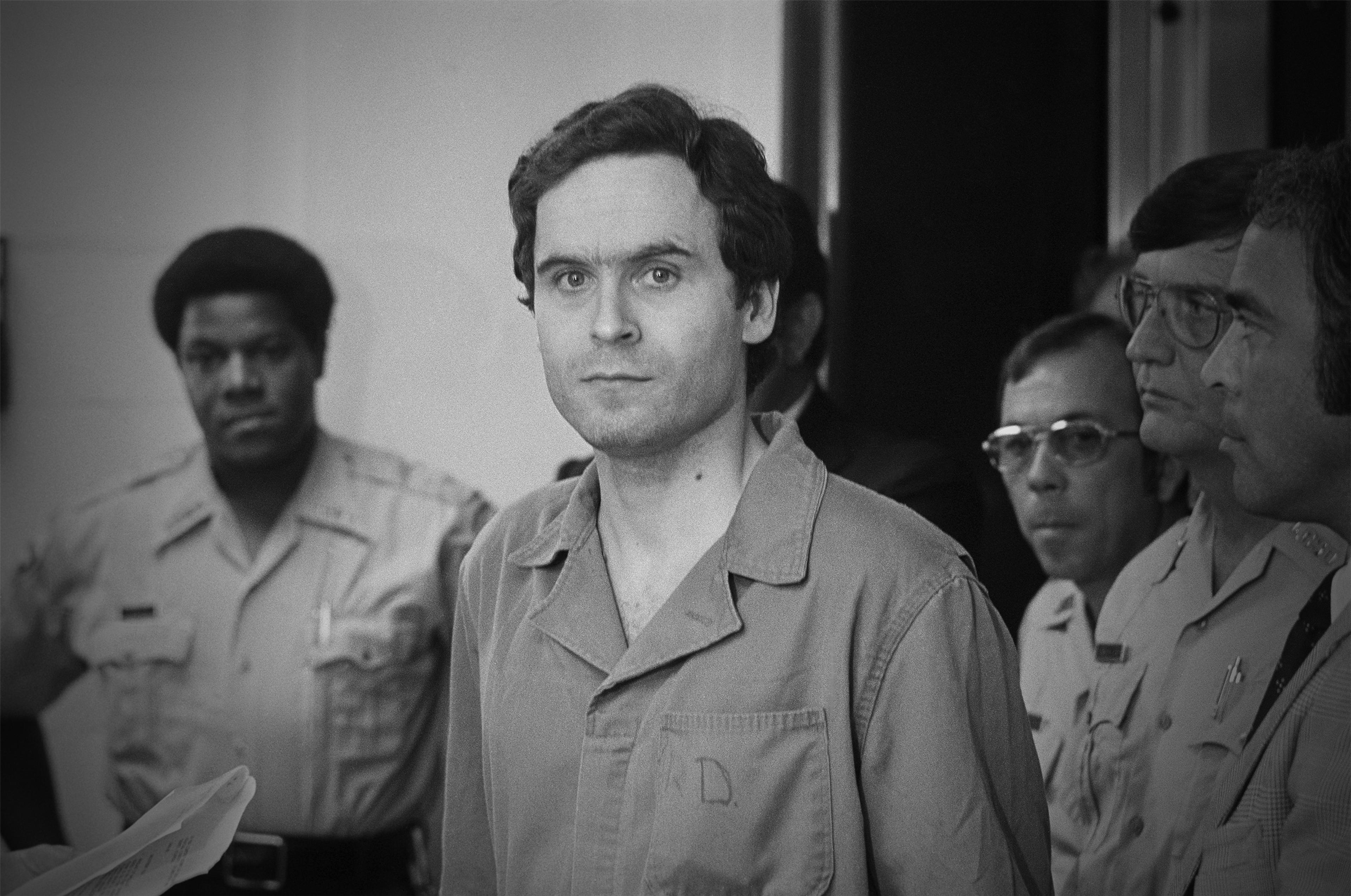
Second, advocates of psychopathy research often base their belief in the disorder on highlighting what they believe are obvious cases of real-life psychopathic offenders. For instance, many researchers believe that infamous serial killers such as Ted Bundy and John Gacy somehow prove that psychopaths are real – that it is the only idea that can make sense of these otherwise senseless murderers. However, this observation might actually be one of the strongest pieces of evidence for psychopathy being a zombie idea because most (if not all) serial killers we know of never appear to be clear cases of psychopathy once we begin to scrutinise their psychology.
Consider Bundy, who was described by the researcher J Reid Meloy as the quintessential psychopath. While Bundy is sometimes portrayed as an otherwise normal person who suddenly decided to kidnap, kill and maul women with no sense of guilt and regret, a careful study of his life reveals that he struggled with all kinds of mental health problems, such as delusions, violent-sexual urges, and substance misuse. He also had a history of low self-esteem and social awkwardness, aspects that are rarely associated with psychopathy. And, for all we know, Bundy had a caring relationship with his family, as well as intimate partners. These relationships may have been flawed, but there’s little reason to question their authenticity. The idea of psychopathy simply does not dovetail with Bundy’s profile.
Moreover, the serial killer argument in favour of psychopathy should instead give us reason to be sceptical about the disorder. If the main evidence researchers use to substantiate their belief in psychopathy is a handful of sloppy anecdotes about serial killers – and this somehow convinces researchers of the disorder’s reality in spite of a lack of empirical evidence – then this suggests there is a powerful bias at play. Exactly the kind of bias that keeps a zombie idea going.
Third, psychopathy research is often portrayed in academic textbooks and science articles as an old paradigm with centuries of ongoing scientific interest. They paint an image of a scientific field that has been linearly advancing our knowledge about psychopathy. However, this image of the paradigm is seriously misleading. The field was always fragmented and struggling to find a foothold in the sciences. As late as the 1980s, there was deep-seated disagreement among researchers on how to define psychopathy. They couldn’t even agree on what exact phenomenon they were studying.
This situation attracted searing criticism from some of the most prominent people in psychiatry and psychology. In 1974, the psychiatrist Aubrey Lewis described psychopathy as the ‘most elusive category’ in all of psychiatry. In 1975, the psychologist Hans Eysenck described psychopathy as a ‘white elephant’: ie, a useless item that’s difficult to get rid of. The historian Henry Werlinder notes that, in the 1970s, it was becoming normal to refer to psychopathy as a kind of ‘waste-basket’ diagnosis, a label that could be stuck on patients if there was no other more fitting diagnosis. And as late as 1988, the influential forensic psychologist Ronald Blackburn argued that psychopathy was simply a ‘mythical entity’ that ‘should be discarded’, and he characterised psychopathy as a morally stigmatising label ‘masquerading as a clinical diagnosis’.
Overall, it is a forgotten fact about psychopathy research that, as late as the 1970s and ’80s, there was a broad consensus in the mental health disciplines that psychopathy as defined by people like Cleckley, Hare and others was probably not a real construct. Cleckley, perhaps the most lauded psychopathy researcher in those years, admitted as much in 1976 in the foreword to the fifth edition of his book, bitterly referring to the situation as a ‘universal conspiracy of evasion’ by his colleagues around the world. He was trying hard to sell the idea of the psychopath, but his colleagues weren’t buying it.
It is therefore curious to observe how quickly psychopathy research changed from being a neglected and ridiculed field in the 1980s to being lauded as one of the most important areas of study in the 1990s. Over the course of less than a decade, the interest in psychopathy research exploded.

Woody Harrelson and Juliette Lewis in Natural Born Killers (1994). Courtesy Warner Bros
What caused this explosion of interest? It’s difficult to say for sure, but the influential criminologist Shadd Maruna recently speculated that it was partially driven by the tough-on-crime movement that peaked in the 1990s. Other possible factors include our overall cultural fascination with the topic – evident in major box-office hits like The Silence of the Lambs (1991), Natural Born Killers (1994) and American Psycho (2000) – which may have inspired psychologists to pursue the idea. Whatever drove the research interest, one thing we know today with the benefit of hindsight is that it was never driven by a comparative increase of empirical knowledge. Common claims about psychopathy were just as inadequately supported back then as they are today. The main difference today is that we have thoroughly tested the idea in hundreds of studies, only to come up empty handed. Now, we have plenty of empirical reasons to discard the idea or at least be heavily sceptical about it.
And this is perhaps the strongest evidence that psychopathy is a zombie idea: for as long as scientists have been studying the idea there has literally been no advancement in evidence-based knowledge. Instead, there has been rapidly growing evidence to suggest the idea is a dud. Yet scores of researchers continue to be interested in it, perhaps propelled by little more than their own bias and the idea’s infectious appeal.
The aggregation of scientific evidence does not corroborate the idea of psychopathy. If anything, it throws the whole notion into doubt
The description of psychopathy as a zombie idea is likely to attract criticism from researchers and clinicians, and rightfully so. Such a view is speculative and deserves scrutiny. Some critics might point out that there are actually a few studies that do appear to corroborate some of the common claims made about psychopathy. They may point to James Blair’s 1995 study that alleged to show that psychopaths have moral-psychological impairments. Or critics might insist that some neuroimaging studies have found unusual brain activations in psychopathic samples.
However, these types of criticism that build on the results from single studies are not serious responses. It is no big secret among behavioural scientists that our research procedures generally entail enough flexibility – known as researcher degrees of freedom – to generate evidence of just about anything in a single study (infamous cases of precognition and priming come to mind). The ability to create eye-popping effects from pure cloth is colloquially referred to as false-positive psychology, and it has, if anything, shown how cautious we should be in drawing inferences from one or even a handful of studies.
The silver lining is that false-positive psychology generates only limited confusion. As the amount of research grows, amassing more and more evidence, meta-analytic reviews will eventually tell a truth-tracking story. And this is the problem facing psychopathy researchers. The aggregation of scientific evidence does not corroborate the idea of psychopathy. If anything, it throws the whole notion into doubt.
If you are not convinced that psychopathy is a zombie idea, this does not erase the central question: what explains the massive extent of null results across hundreds of studies and decades of scientific research interest in the psychopath? Personally, I have thought long and carefully about this question. And I haven’t been able to come up with a better answer than the one sketched out here. The idea is dead, and it is high time for scientists to start calling it out for what it is.