Listen to this essay
25 minute listen
In 2003, a unique baby goat lived and died. In doing so, she might be regarded as the first species to have endured the indignity of going extinct twice.
The Pyrenean ibex, also known as the bucardo, was once native to the mountainous regions of Spain. By the mid-20th century, hunting had severely depleted populations. By 1999, only one survived, named Celia. When she died a year later, the bucardo was declared extinct.
While she was alive, tissue samples from Celia’s ear were collected, and frozen in liquid nitrogen. Encouraged by previously successful techniques for cloning animals, a team of Spanish, French and Belgian scientists hoped to bring back the bucardo. They cultured the harvested cells to isolate bucardo DNA, and transferred cloned genomes to domestic goat eggs with the nuclei removed. A total of 208 embryos were transferred to surrogate mothers: either Spanish ibex (a still-living, related species) or hybrids of Spanish ibex and domestic goats. Seven pregnancies resulted, but only one goat carried to full term. That goat gave birth to a bucardo kid by caesarean section.
The tiny Pyrenean ibex was genetically identical to the last living bucardo, making her a direct clone. But while the kid appeared healthy until birth, she never took a breath. The desperate team tried to help her breathe, but she was declared dead within a few minutes. An autopsy on her miniature body identified a defective lung.
The story of the cloned bucardo kid can be told in many ways. Was this a rare double-extinction? Perhaps. More cautiously, we might suggest that the experiment was never a successful de-extinction at all, because the kid was never able to perform the same ecological function as the lost species. But there is also a more provocative telling: that neither happened, because the bucardo never went extinct in the first place.
In recent years, some advocates of de-extinction technologies have argued that if an animal’s tissues and cultured cells persist in a state of cryopreservation, it is not extinct, but ‘evolutionarily torpid’. In other words, the death of the last living animal is not an ending, merely a pause.
This reframing isn’t merely semantic – it reshapes the meaning of conservation. If frozen cells forestall extinction, when do we declare a species lost? And if genetic material assuages our guilt that a ‘way of being’ survives, why invest in protecting living animals? The question cuts deeper: what distinguishes being alive from existing as dormant genetic material?
Beyond recent heated debates about whether de-extinction is possible or wise lies a more fundamental shift: these technologies are already redefining the meaning of life, death, and extinction itself.
Declaring a species extinct is not just a technical decision, but a notoriously difficult process, especially with wild lives. The International Union for Conservation of Nature (IUCN) declares a species officially extinct ‘when there is no reasonable doubt that the last individual has died’.
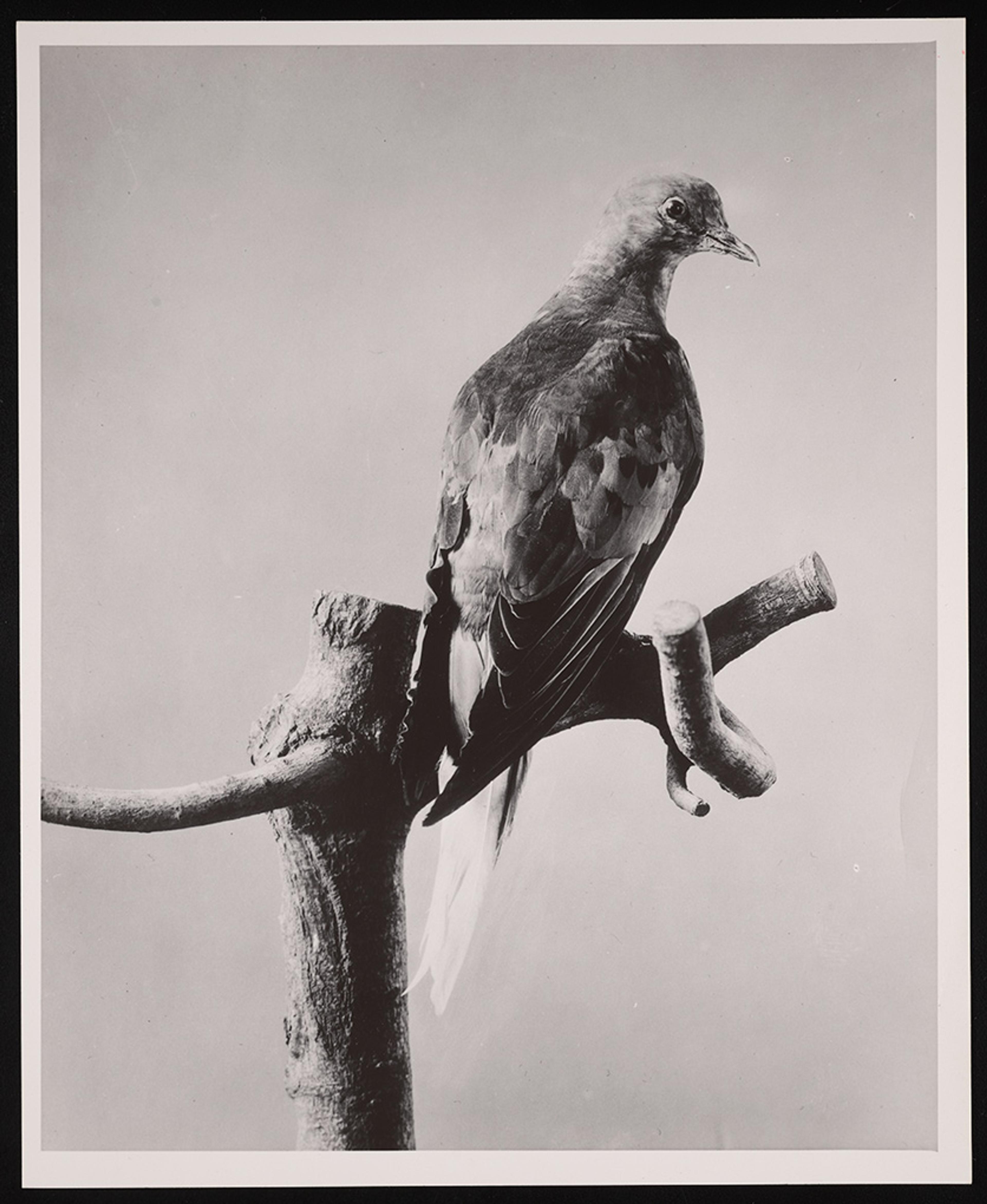
Martha, the last known passenger pigeon. Courtesy the Smithsonian National Museum of Natural History
Occasionally, the death of celebrity ‘endlings’ means we know when species were lost. Perhaps the most famous is Martha, the last known passenger pigeon. She died on 1 September 1914 at Cincinnati Zoo. She was quickly skinned, stuffed, and displayed mounted on a thin branch. She now resides in the stores of the Smithsonian Institution in Washington, DC. Some living endlings are so precious that they are watched over round the clock by armed security guards, such as the last pair of northern white rhinos, Najin and her daughter Fatu, in Kenya. Their deaths will make global headlines and mark the extinction of their kind with rare precision. Mostly though, extinction is far more likely to occur without us noticing, or take us decades to confirm the loss.
Yet in recent years, some have suggested that no species is truly lost, so long as genetic material remains. Through de-extinction, they say, we can even revive creatures that no one alive has encountered: dinosaurs, dire wolves or dodos. Whenever de-extinction hits the headlines – as it has done often in recent years – the stories tend to focus on the past, whether reviving lost species or recreating ecosystems. Appealing to loss is a powerful marketing tool for companies trying to raise capital and convince us that de-extinction is a viable means of conservation. But de-extinction is also a process of deliberately building radically different futures, rather than mere revival. The future-oriented nature of de-extinction is rarely discussed, despite its potential to reshape fundamental aspects of how we relate to life and death in the natural world.
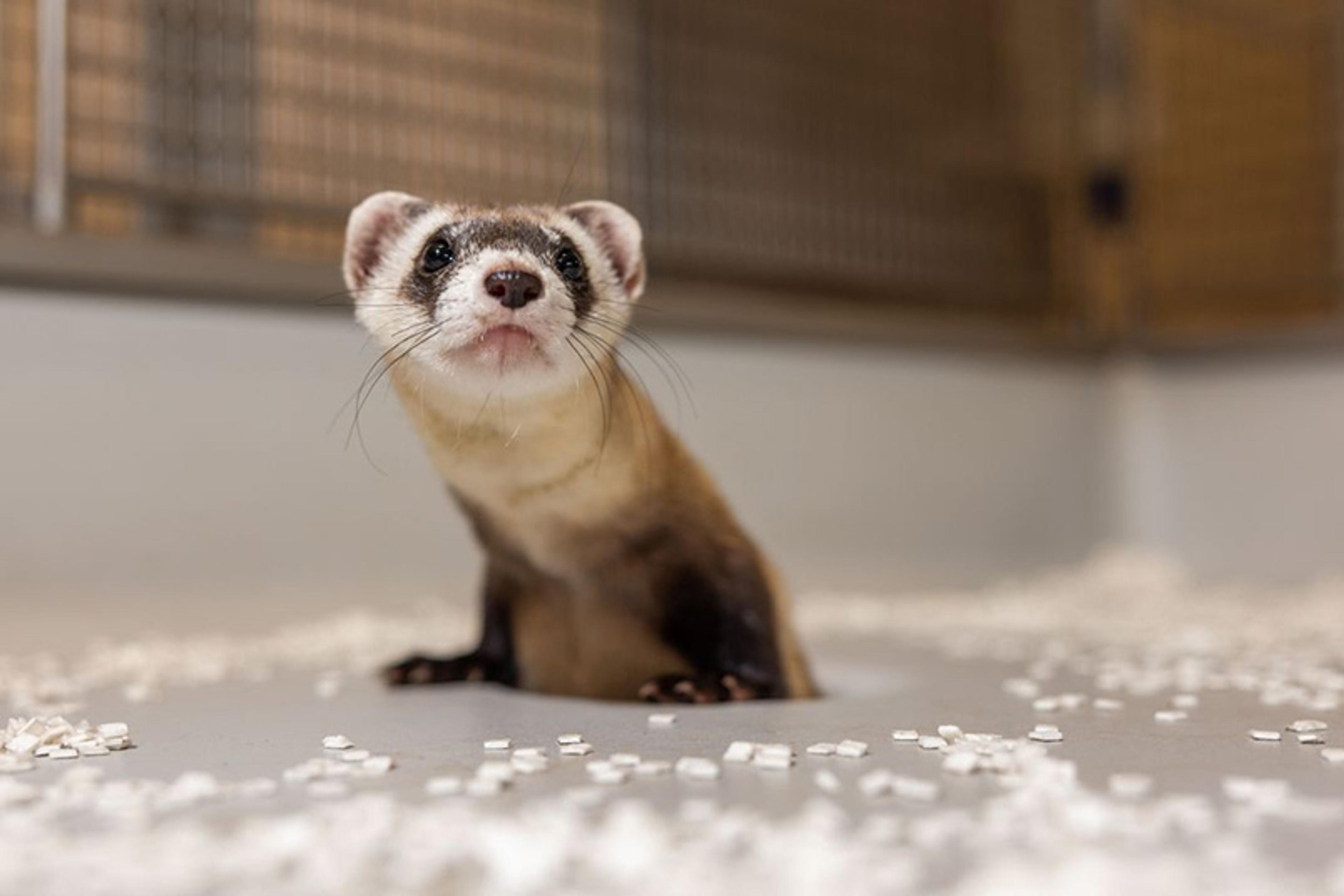
Antonia, a clone of the critically endangered and twice-thought-extinct North American native black-footed ferret, gave birth to kits in 2024. Courtesy Revive and Restore/Smithsonian
One de-extinction organisation that has made no secret of seeking to steer nature’s future, and our relationship to the world beyond us, is Revive and Restore, co-founded in 2012 by Stewart Brand and Ryan Phelan. The organisation was originally an offshoot of the Long Now Foundation in San Francisco, best-known for another long-term legacy: a clock designed to last 10,000 years. Brand’s TED talk ‘The Dawn of De-Extinction. Are You Ready?’ (2013) has amassed millions of views and is a passionate manifesto for creating a world in which children grow up without feeling the ‘sorrow, anger, [and] mourning’ of extinction. Instead, he imagines a world where they’re full of wonder from encountering animals that lived thousands of years ago.
While the birds may look the same, on a genetic level, it is not the original bird, but a hybrid
Underpinning these visions, there is often also a subtle reframing of what the words ‘extinction’ and ‘de-extinction’ actually mean. To many, de-extinction simply means bringing back mammoths or dodos from the dead, but Ben Novak of Revive and Restore, a scientist who is trying to bring back the passenger pigeon, offers a broader view. In ‘De-extinction’ (2018), he defined the process as ‘the ecological replacement of an extinct species by means of purposefully adapting a living organism to serve the ecological function of the extinct species’. According to this definition, the world’s first successful de-extinction happened decades ago, with the revival of the peregrine falcon in North America in the late 20th century.
Peregrine falcons are astonishing ways of being. Long prized in falconry for being one of the fastest birds in the world, they are instantly recognisable with blue-grey backs, white chests covered in dramatic black bars, and a dark moustache along their cheeks. When hunting, they can reach speeds of up to 200 mph (320 km/h) in bullet-like stoops (fast dives with wings close to their body) before grasping their unfortunate prey in their sharp yellow talons. After the Second World War, the North American peregrine population collapsed once the chemical fertiliser DDT gained popularity. Apex predators such as peregrine falcons consumed the fertiliser after it entered the food chain through prey. Affected birds produced eggs with much thinner shells that frequently cracked during brooding. By standard definitions, the birds were locally extinct by the 1960s.
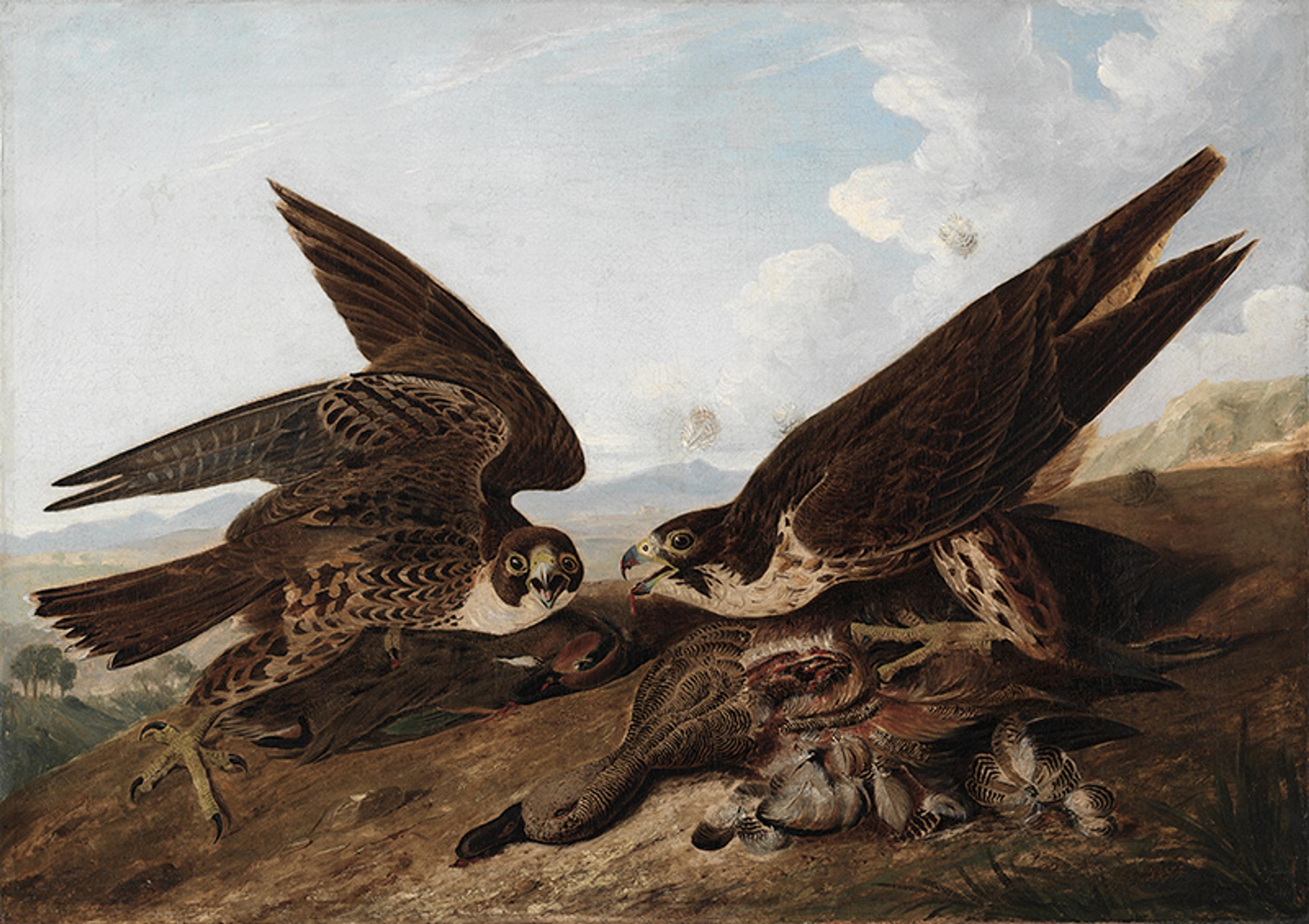
Peregrine falcons (c1827) by John James Audubon. Courtesy the Cleveland Museum of Art
So, in the 1970s, the Peregrine Fund – a non-profit conservation organisation – bred crosses between subspecies. These were released in 1974 and, ultimately, they reintroduced peregrines across the United States. Since public outcry had led to a DDT ban two years earlier, the new birds thrived: a new genetic lineage who performed the same ecological function as their lost kin.
Most Americans might assume the peregrine they watch soaring across the 21st-century sky is the same falcon that their great-grandparents saw. While the birds may look the same, on a genetic level, it is not the original bird, but a hybrid. Whether you call its replacement a de-extinction – or merely a conservation success through smart breeding – a way of being that had existed for millennia was lost. Does engineering a replacement obscure that absence, and our role in it?
In his redefinitions of extinction and de-extinction, Novak also goes further, declaring that a species is only truly lost when its genetic material is gone. Crucially, this applies even if all living individuals of a species have died out. With cryopreservation, there is no ending, only a temporary ‘evolutionary torpidity’. This can’t apply to long-dead creatures like dinosaurs whose genetic material is lost, but it can apply to animals whose cells and/or tissues have been cryopreserved, like the bucardo, the Yangtze river dolphin, Captain Cook’s bean snail or the Pinta Island giant tortoise.
Whether Novak’s definition is adopted more broadly remains an open question, but the list of the torpid may well grow longer as living species disappear and we keep their remains on ice. After all, scientists have long been able to preserve genetic lineages without living endlings, due to technologies developed since the Second World War. Understanding the history of how, and why, scientists learned to freeze living tissue reveals just how profoundly these techniques have already begun reshaping the meaning of extinction, through allowing new forms of existence.
In 1949, Nature published a paper by Christopher Polge, Audrey Ursula Smith and Alan Parkes reporting that they had learned how to freeze biological tissue without damage. We’re so used to living with frozen technologies, from high-powered domestic freezers to IVF, that this might seem utterly unremarkable. However, their serendipitous finding paved the way for the new science of cryogenics.
If you’ve ever accidentally frozen a cucumber or some fruit in your fridge, you will know what ice does to biological tissue. Water expands when frozen, damaging the cellular structure, leaving behind inedible cucumbers. By adding glycerol to rabbit, fowl and human semen, the team learned to avoid crystallisation and thaw frozen tissue with the cells intact.
The new technique piqued the curiosity of the animal breeder John Rockefeller Prentice. Having founded the American Breeders Service eight years earlier, he wondered whether cows could be artificially inseminated with frozen semen. His hunch was proven correct when Frosty, the world’s first calf born of frozen bull semen, came along in 1953. While Prentice saved himself the trouble of ferrying live bulls across the country and streamlined animal husbandry, scientists were quick to explore the technique’s potential for animal conservation.
Frozen zoos place species in a liminal state, making the line between life and death significantly more complicated
In 1975, the geneticist Kurt Benirschke established the Frozen Zoo, urging colleagues to use cryogenics to create ‘genomic libraries’ to protect against future unknowns. Based at San Diego Zoo, the repository was the first of its kind and now holds more than 10,000 samples of tissue and blood representing more than 1,000 taxa, including extinct species. In Benirschke’s icy wake, multiple international projects now archive endangered species as frozen samples of DNA and tissue in the hope that they might one day prove useful for conservation. In 2004, the Frozen Ark was established as an international consortium of projects preserving endangered species by freezing their DNA and creating a database of existing samples. The project brought together British partners such as the Zoological Society of London with international partners including the Conservation Genetics Specialist Group at the IUCN, Conservation Biobank in Denmark, and the Mediterranean Marine Mammal Tissue Bank.
The historian Joanna Radin’s remarkable history of cryopreservation, Life on Ice (2017), suggests scientists regarded these new freezing techniques as a means of creating a latent state of existence. For Radin, ‘Latent life became the raw material out of which experimentalists created knowledge, technologies, and still more forms of life.’ Frozen zoos, arks and similar projects place thousands of species in a liminal state, making the line between life and death significantly more complicated. These are not abstract philosophical distinctions, but the direct consequences of current techniques. Untangling the ethics and meaning of these technologies for how we understand extinction means choosing between very different possibilities with important consequences for the future of life on Earth. These competing perspectives have sparked fierce debate about the practical and ethical implications of redefining extinction.
De-extinction critics worry that, if we no longer think of extinction as irreparable harm, threatened species will suffer. Until recently, species loss was a permanent diminishment of life on Earth. Occasionally, species thought lost have been rediscovered, such as the coelacanth or the Wollemi pine, but this is a rarity. That finality has motivated many forms of environmental action precisely because of the conviction that lost species are gone forever. But if species exist as disembodied genetic lineages in frozen arks, we may grow reluctant to define them as truly lost. Why reduce the environmental impact of modern, industrialised life if revival is possible?
This concern extends to economics. Genome sequencing may be getting cheaper, but the cost of making even a single species de-extinct is high, possibly astronomical. Many conservationists worry that de-extinction could divert resources from protecting threatened species and their habitats.
There’s the hope that bringing back mammoths will help turn the Siberian tundra back into productive grassland
Proponents of de-extinction counter these objections on several fronts. They argue that their research draws predominantly from private donors who might not be as keen to fund traditional conservation projects. While this may be the case, it underplays the intimate, and often uncomfortable, connections between science, capitalism and philanthropy. Andrew Carnegie’s support of palaeontology is familiar to anyone encountering the many plaster casts of Diplodocus carnegii in museums across the world. Hugh Hefner’s funding of important scientific research into human behaviour from the proceeds of the Playboy empire is less well known. Most recently, and most shockingly, institutions such as Harvard University, Stanford University and MIT have been forced to publicly acknowledge and distance themselves from their donor, Jeffrey Epstein, who was convicted of child sexual exploitation and sex trafficking. Extraordinarily, Epstein continued to fund numerous scientific projects, including de-extinction, after his first 2008 conviction, until new charges were brought. Scandals aside, there is also the question of whether elite wealthy philanthropists should make decisions about the future of conservation. If exceptional wealth gives some people disproportionate power in deciding which species are chosen for a second chance, this means inequality isn’t just shaping the present, but all future life on Earth.
Beyond funding questions, de-extinction advocates also argue that it might help to re-establish lost ecosystems. The most dramatic example is the hope that bringing back mammoths will help turn the Siberian tundra back into productive grassland. The Russian geophysicist Sergey Zimov has already established a reserve called Pleistocene Park in Siberia to drive broader ecological change. Supporters also emphasise that gene-editing techniques developed for de-extinction could protect threatened species by reintroducing genetic diversity or engineering disease resistance.
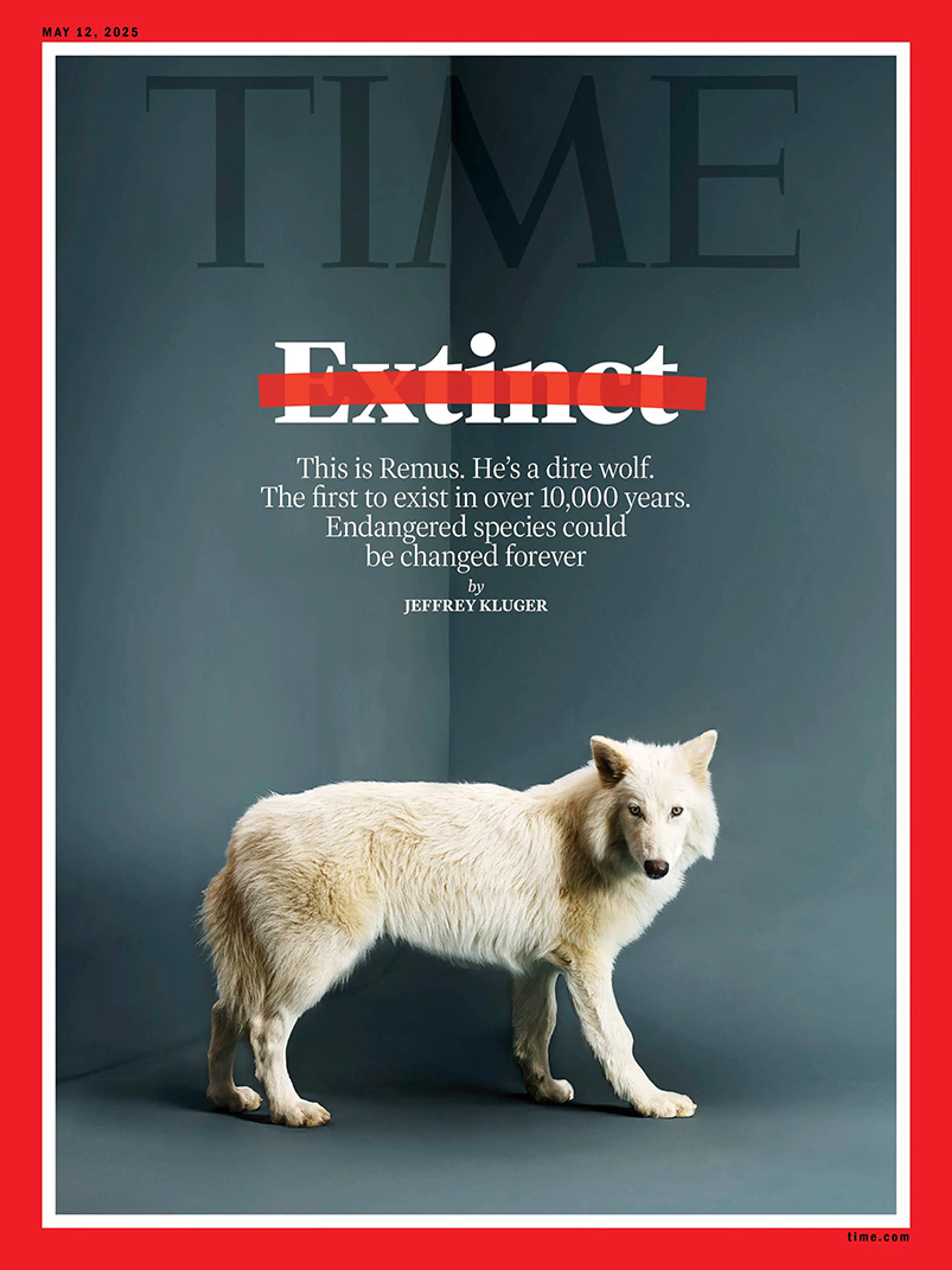
Courtesy Time Magazine, photo by Robert Clark
In 2025, Time magazine ran the cover-story ‘The Return of the Dire Wolf’ featuring a snow-white wolf it proclaimed as de-extinct, more than 10,000 years after its extinction across North America. Global headlines enthusiastically repeated the grand promotional claims of the biotech company Colossal Biosciences responsible for breeding the wolves. Amid immediate controversy, many scientists dismissed the claims as overblown because the animals were merely grey wolves engineered to resemble dire wolves. Yet even scientists who dismissed the experiment suggested that the underlying techniques of synthetic biology might help conservation.
Within six months, it was evident that the gene-editing techniques developed for de-extinction will likely be used in conservation relatively soon. In October 2025, the IUCN held a World Conservation Congress in Abu Dhabi. After a week of debate, the Members’ Assembly rejected a potential moratorium on the release of any genetically modified organisms into the wild as a conservation measure. Although deeply controversial, the vote led the IUCN to establish its first policy on synthetic biology and the recommendation that engineered organisms released into the wild are closely monitored on a case-by-case basis. De-extinction, in other words, has moved from possibility to policy.
So what does the future hold if de-extinction becomes a routine possibility? If the visions of its strongest advocates come to pass, future generations would no longer mourn extinction, but accept it as just another stage in a cycle of living, dying, and revival. The desire for our relationship to nature to go beyond grieving, to one of joy and wonder is understandable. Many of us first learn about extinction as children and remember it as a painful moment of recognition that we will never encounter extraordinary beasts such as the dinosaurs, mammoths or dodos.
But if we accept that frozen cells forestall extinction, we will fundamentally alter what it means to lose a species and, with it, our moral obligation to the living. The question then is no longer whether species can be revived, but whether we’ll still feel compelled to save them before they die. Cryopreservation doesn’t just preserve genetic lineages – it transforms extinction from a permanent loss into a temporary inconvenience we can choose to address later.
We don’t need technological erasure of loss – we need to learn how to grieve, rally, and save life before it disappears. The biodiversity crisis won’t be solved by bioengineering better relationships with genetic code. It requires better relationships with living beings: seeing them not as resources to manipulate and harvest to suit our own refusals to change our lifestyles, but as our kin with their own claims to justice rooted in being alive.
If a dodo was ever revived, how would that being learn to live as a dodo? Who would teach it to sing the dodo’s song?
De-extinction will never be purely, or even primarily, the revival of lost species, but the bioengineering of new life forms that we choose to name after lost ways of being. Given how fundamentally de-extinction might structure our shared future, what kind of future are we building, on which grounds, and for whose benefit? Tanks of liquid nitrogen can preserve genomes for decades, possibly indefinitely, but is this enough? Relying on preserved genomes as an insurance policy against the finality of extinction risks reducing species to little more than genetic information, rather than appreciating them as living ways of being alive.
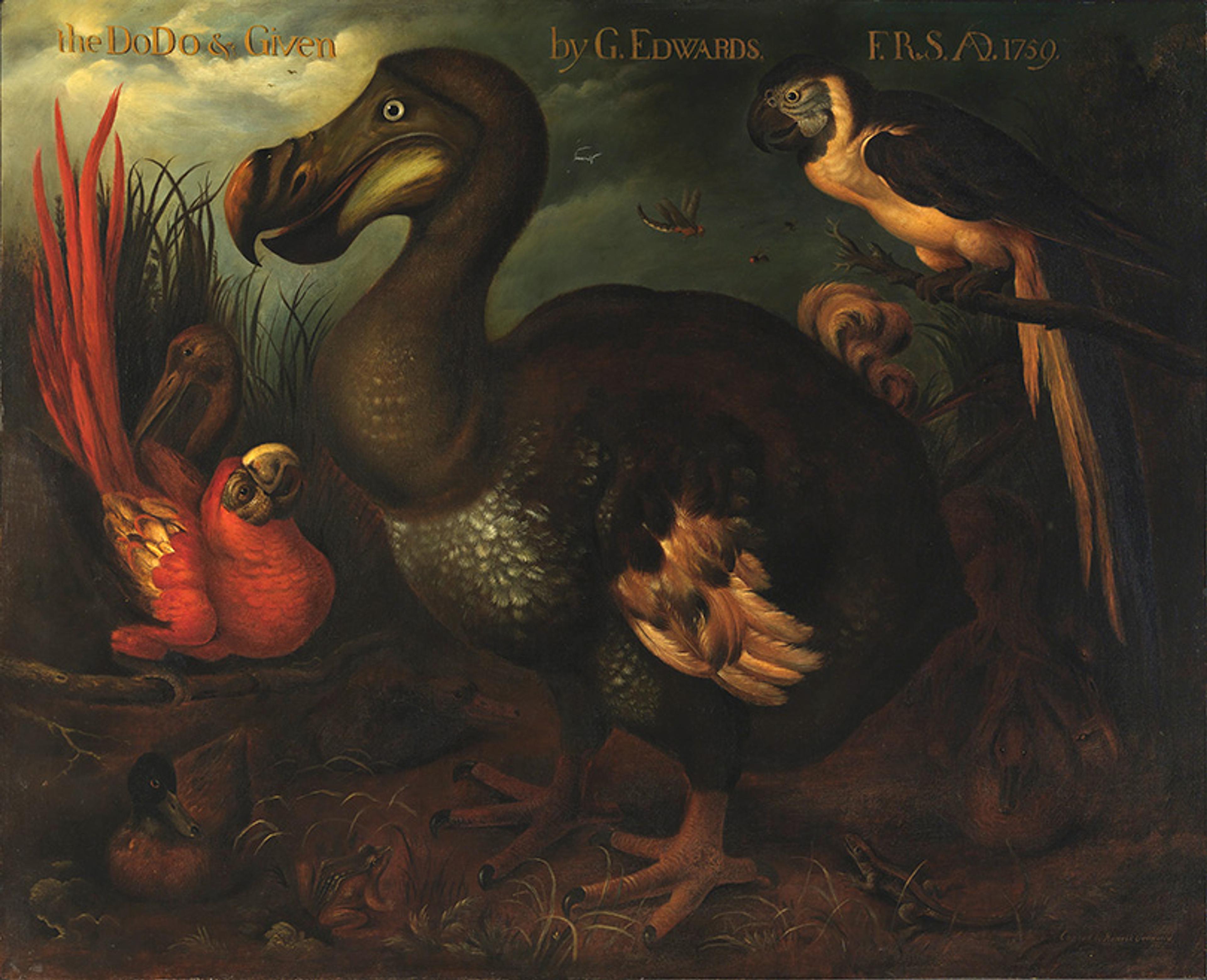
The Dodo and Given (1905) by Henrik Gronvold, copy after G Edwards. Courtesy the Smithsonian American Art Museum
Imagine if something resembling a dodo was ever revived, how would that being learn to live as a dodo? Who would teach it to sing the dodo’s song, or raise more dodos? Some might suggest that this is irrelevant if the revived bird is able to perform a similar ecological function to its lost ancestor. While understandable, the dodo’s revival would still depend on profoundly unequal relationships. Humanity’s sense of having a unique authority to make such decisions about other species is an entitlement that has underpinned many of our present woes, from human-induced climate change to the biodiversity crisis.
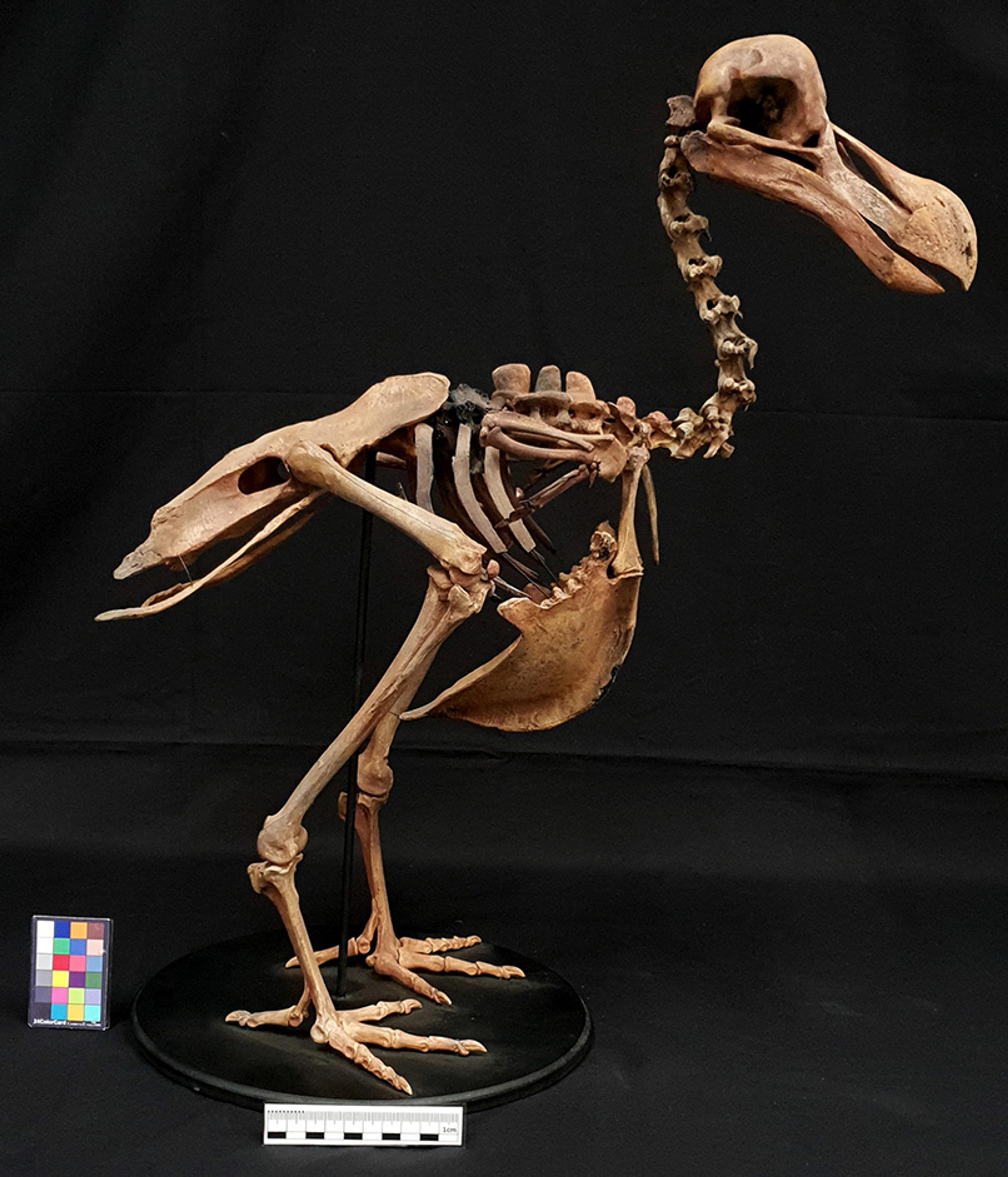
Skeleton of a dodo (Raphus cucullatus) © Oxford University Museum of Natural History
We are at a crossroads. We have already lost many ways of being caused by centuries of human exploitation, and face losing many more kinds without taking action. Despite the accelerating loss, hope endures. Instead of perpetuating human supremacy, even with the most laudable of motives, we can still choose a different future. Instead of reducing life on Earth to genomes or existences that should serve our needs, we would gain far more by recognising species as ways of being with their own needs and rights, with their own forms of kinship and community, and the right to live as they are. Instead of relying on technology to create new lifeforms to assuage our guilt, we could truly rethink how we treat life on Earth. Doing so would help establish a world in which humanity held itself accountable for the losses we have caused, and use that knowledge to transform our relationship with life on Earth.
Using our profound concerns to root ourselves in new relationships of respect and renewal would potentially create the necessary conditions for life to thrive in a very different form. Whether you oppose de-extinction or not, it is already a reality. These projects have already yielded new life forms and will likely lead to many more within our lifetimes. Whether this constitutes justice or not is another much trickier and more open question.