Listen to this essay
34 minute listen
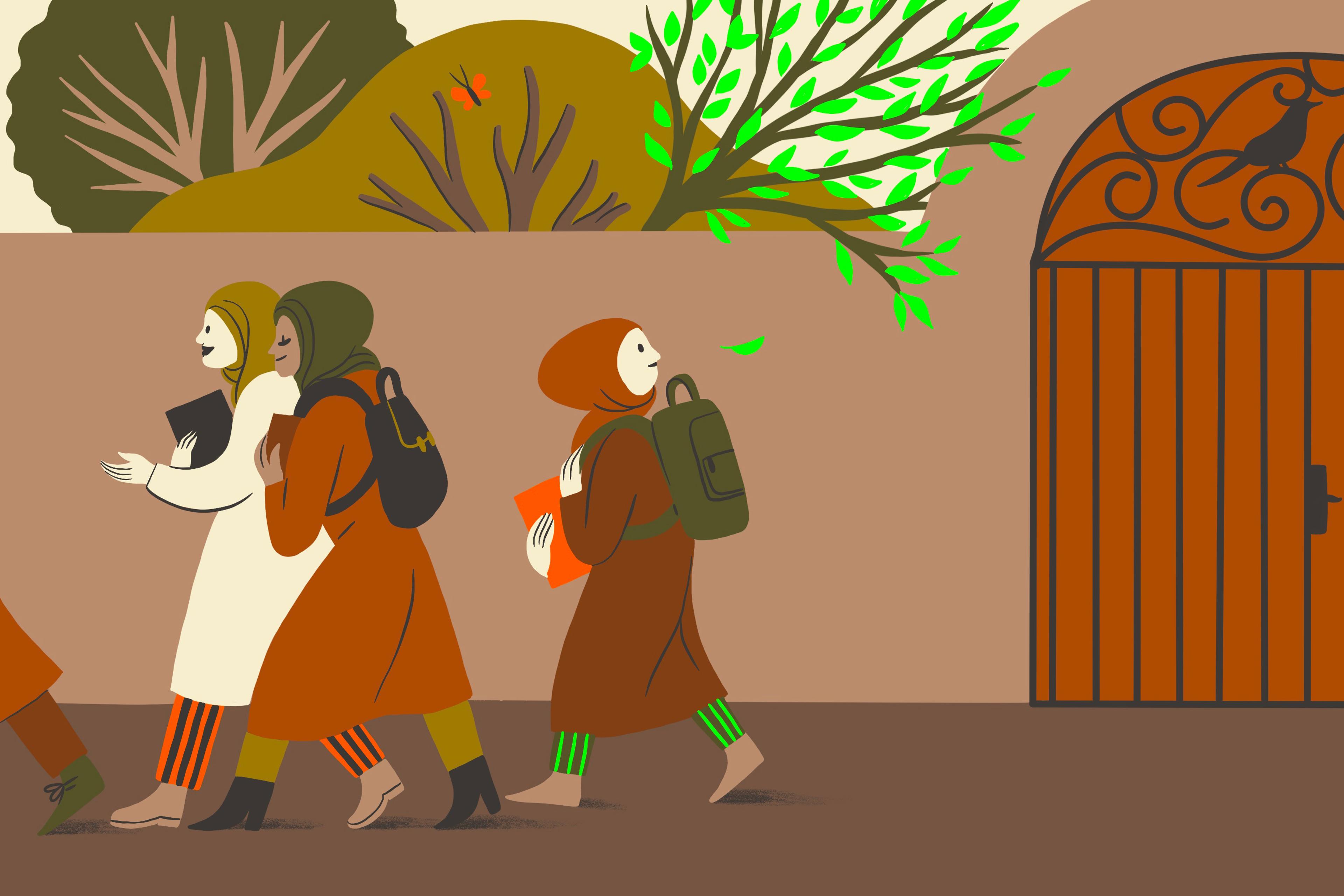
Recently, I visited a part of my neighbourhood where there’s a park. The green space was hived off by concrete walls, iron railings and barbed wire. From inside came the sound of laughter and the happy voices of men and boys. Outside, I saw women of all ages walking on the dusty road, banned from entering the park. I spotted some school-age girls carrying books and pens, talking together and walking the same path I once walked. Something about their seriousness threw me back to my own youth. I was fortunate enough to attend school, study in the faculty of my choice and eventually build a career in a field that I loved – despite my path being filled with challenges. But I felt such sorrow for these girls, unable to pursue higher education or the jobs that they’d be passionate about. Afghanistan is facing a dark time, identical to the one I faced at the beginning of my own career. Once more, Afghan women and girls are being forced to pay the price of their freedom for the country’s uncertain future. I know exactly how they must feel. I faced the same struggle more than 30 years ago.
June 1992. Until that moment, I would not have left my job if it cost me my life. Despite the constant bombings and the daily hailstorm of bullets and rockets, I always showed up at work. But I had little choice. It started like this: it was the early days of the mujahideen government. I was preparing to record a show at the studios of the National Radio and Television of Afghanistan (RTA), papers spread in my hands, when the new head of television, who had links to the mujahideen, walked in, saw me, and quickly looked away, muttering under his breath in disgust. He had a quiet word with the producer before leaving the studio. When I asked why the TV director had reacted that way, the producer told me that the director opposed women working and that, by refusing to look at me, he’d shielded himself from sin.
That day I carried a strange feeling home. How could I continue to work with people who looked upon women with such loathing? There’s a Persian proverb: The pride of the poor is the death of the poor. Although I desperately needed my job, I was so furious I could think of nothing except resigning. I had no idea who I would become without work and the freedom it gave me, a freedom I wanted all women to enjoy. But it hardly mattered, since very soon after I quit, most of the female employees at the television station were fired. I would never have imagined then that, 30 years later, the situation for women in Afghanistan would be far worse. Now, as I approach the end of my working life, amid the most extreme and far-reaching oppression of women I have yet witnessed in this country, I am overwhelmed by a sense of déjà vu, as if the past is doomed to repeat itself.
Back in 1992, the mujahideen also announced that women were not allowed to leave their homes without wearing headscarves and completely covering their bodies. Until then, many educated and working women dressed in European clothing – skirts, blazers, stockings, blouses, and trousers. Now they had to cover themselves from head to toe. The regime also opposed women working or, indeed, undertaking any kind of activity outside of the house. Many of my colleagues left their jobs and fled to other countries in search of a peaceful life. They wanted to keep their freedom and continue to work. But I lacked money to leave.
As well as my job in television, I lost my other work to the civil war and was left entirely without an income. I laboured under the crushing burden of poverty for two years, barely sensible of the changes it wrought on me. Until one day, as I was walking down the street covered up in a black dress and large shawl, I ran into a former colleague who greeted me with a hug and kissed my cheek. But when she put her hand on my arm, she suddenly screamed.
‘How skinny you’ve become! You’re nothing but a skeleton! Thank goodness you’re wearing these clothes; they’ve covered up how thin you’ve become.’
The war stole away our security, our peace of mind and our jobs, and it destroyed much of the city’s infrastructure, affecting water and electricity supplies. From where I lived with my family in an apartment in Kabul, we had to walk a long distance every day to get water. Eventually, together with our neighbours, we decided to build a well in front of our building. We collected money from each household to pay for the drilling and solve a critical problem. And our small community achieved it ourselves: the government did nothing to help. I was reminded of a quote I’d once read, attributed to the American author Zig Ziglar: ‘You don’t have to be great to start, but you have to start to be great.’
I was not just teaching but trying to instil the spirit of hope in my students
A decade earlier, not long after the Soviet invasion of 1979, I’d graduated with top grades from the Faculty of Languages and Literature and completed an intensive teacher-training course. When I secured my first government job as a primary school teacher, I was thrilled to serve my people and draw a monthly salary that would alleviate some of my family’s financial difficulties; at the time, my son was just a year old. The boys’ school was in the heart of Kabul, on the side of the road leading to the city’s airport. A single-storey building, it had a large outdoor area surrounded by classrooms. Most of the teachers there were women. I taught literature; both poetry and prose. A few days into the job, a student called me over and, pointing to his desk partner, said: ‘Teacher, Gul Afghan is not studying.’ Gul Afghan, a fourth-grader, had his hands tucked under the table. His desk partner pulled them out, saying: ‘Look, he has a picture in his hands. He always looks at it and pays no attention to the lesson.’ The photograph showed a young man in an officer’s uniform, Gul Afghan’s father, a pilot who’d lost his life when his plane was shot down by an insurgent rocket. At that moment, a helicopter flew over the school, releasing flares. Gul Afghan looked up mournfully. ‘If my father hadn’t run out of flares,’ he said, ‘the enemy wouldn’t have been able to shoot down his plane.’ I felt so sorry for him and gently stroked his head.
I realised that these were not normal students, but children of war: every one of them had a story about its horrors. My job was difficult because I was not just teaching but trying to instil the spirit of hope in my students, even as I sometimes struggled to hold on to my own. The intensity of the war, the killing, and the destruction of homes by Soviet bombs and mujahideen rockets made survival itself uncertain. On my way to school, I’d see Soviet tanks driving along the streets and passing by the school. I worried about my students crossing that street, fearing a tank would run them over. There had been several such incidents in Kabul. I would hold the hands of several students at a time and walk them to the other side of the road.
The Russian soldiers wore steel helmets and strange gloves made from thick wool. They had fair skin and their cheeks would turn red in the summer heat and the winter cold. Each had a Kalashnikov slung over his shoulder and a belt of bullets around his chest and waist. The soldiers didn’t talk to anyone. Sometimes, my boys would hurl a small stone at them from a distance because their families had told them the Soviets were invaders.
It was a brutal and merciless war. Countless jets and military helicopters flew over Kabul daily on their way to target mujahideen strongholds in rural areas, filling the sky with flares. Sometimes the helicopters flew too low and people would get hit by their flares. Soviet soldiers on the ground were firing their Kalashnikovs, artillery, and mortars. Meanwhile, the mujahideen attacked Soviet bases in the city. I wondered how I could teach when my mind was full of anxiety. I worried constantly that the fighting would reach my son’s daycare. What would I do then? There weren’t any telephones, so I couldn’t check on him. At night, I was often afraid. I had nightmares about being stuck on a battlefield, and of warplanes colliding in the sky above.
No one was safe. Going to work was very risky, especially for women. If I were to be killed by a bullet or rocket outside of home, my family would be shamed for it and told that I’d died without dignity. Working for the government was another danger, because the opposition assumed that everyone associated with it supported its policies. Yet I myself was against the Soviet-backed puppet regime! Sometimes I’d feel sorry for the Soviet soldiers. Just as I worked for a government I didn’t support, they might not have supported the invasion of my homeland.
After working at the school, I took a job as a lecturer at an educational institute in Kabul. Along with the new job came increased responsibilities and a slightly higher salary. Since lecturers were regarded relatively highly in society, I was determined to live up to the role. I would type lecture notes on a typewriter and spend long hours preparing my literature classes. My students, both male and female, were at different levels; some were truly dedicated, reading extra books and displaying extensive knowledge. As their teacher who needed to know more than they did, I undertook a good deal of reading myself, buying books from the market and studying them, to keep up with new publications and theories. Students would engage in lively discussions in class and ask questions that I had to know the answers to. If I didn’t, they could report me to the administration – justifiably, I felt, even if that meant there was a possibility of losing my job.
Sometimes, the students held political discussions. Like the schoolchildren, they too were wartime students, some of them deeply traumatised, and their debates often became heated – some siding with the government, and others backing the mujahideen. I had to mediate these discussions with caution, as there were government spies even among the students. It was important to remain neutral. Yet the war had a big impact on me as well. I couldn’t bear to see people suffering, and, when I did, it took an emotional toll. I sometimes wished I was a poet, so that I could express my feelings. I later turned to writing fiction, using words to portray the lives of people. This gave me peace. This was my passion.
It was around this time, in late 1979, that, alongside my studies, I began working part-time at the RTA, where I anchored the live news and presented literary shows. As a public figure, I needed formal clothes and makeup, and I remember how stressful it was to source these in wartime; how I had to be constantly on my guard, since walking around the market searching for affordable clothes was dangerous. Rockets were often fired on crowded markets, killing countless innocents. No one ever knew where or when there would be an attack, since neither side ever gave warning before air, missile or ground attacks to give people time to evacuate and move to a safe place.
The RTA building was guarded by Soviet soldiers, and tanks were also stationed there. I was terrified of these invaders who’d arrived in Afghanistan using force, and who marched around the place with guns slung over their shoulders. I’d walk past them as quickly as I could to get to the broadcasting studio, which was full of Afghan technicians who made me feel somewhat safe. On working days, I’d arrive at the radio station at 5 am. My live announcement started the radio’s broadcast for the day. There was only one official radio and television station in all of Afghanistan back then, and its news and programmes weren’t neutral. Although I wasn’t affiliated to any political party, I received death threats from the mujahideen because I worked for the government.
The young boys who had been playing there moments earlier now lay motionless
When the mujahideen gained control in the spring of 1992, fierce fighting broke out among them over the distribution of regional power. There was no shortage of weapons and ammunition: some left behind by the communist regime, and the rest supplied by countries such as Iran, Pakistan and Saudi Arabia, which supported different groups. Winter came. The walls of our apartment felt as if they had turned into blocks of ice. One morning, a rocket strike near my home broke all our windows into pieces. It wasn’t the first time our windows had shattered. But this time it was snowing heavily, and freezing air rushed into our apartment making it unbearably cold. We thought that, if we weren’t killed, we’d surely freeze to death. We couldn’t replace the windows for 10 days, and to stay warm we bought coal and placed a sandali stove in our room.
On one of those cold days of sufferance, the sun shone brightly. I had a little girl now too, and I went to the balcony with both my children, hoping the sun would warm us. After days of being holed up, we longed to see the outside world. Following a pause in the fighting, children and teenagers emerged, tentatively at first, massing in the outdoor area in front of our apartment building. A little further down, from a field where several boys gathered to play volleyball, we began to hear cheers and joyful cries in our neighbourhood. I enjoyed watching the boys at play and, for a few moments, it was possible to forget all about the war. But then, out of nowhere, a deafening boom silenced the voices. My children and I fell to the floor, pressing our ears tightly with our hands. The children started crying, and I held them close in my arms. The rocket had slammed into the volleyball field, filling the sky with dust and smoke. The young boys who had been playing there moments earlier now lay motionless on the ground, covered in blood.
The next time our neighbourhood was targeted by rockets, we rushed to our building’s basement. Later, we learned that a rocket had hit another residential building nearby. Eleven people were martyred, including nine boys and men between the ages of five and 25. The rocket and artillery attacks were so intense that it was impossible to bury the dead. But, eventually, all the neighbours clubbed together and buried the bodies of the martyrs in a mass grave next to the public staircase in front of the apartment building. When I passed the site some days later, I saw that a tombstone had been erected over the mass grave. I stopped for a moment to read its inscription and felt a wave of sadness sweep through me. I prayed for the souls of the martyrs.
Living in Afghanistan had become impossible. Every day, trucks would park outside our apartment building, and our neighbours would load their bags onto them. Some were fleeing to the provinces, others to neighbouring countries. I considered them lucky. In the end, only three families and a gardener remained in our building of 40 apartments. All the abandoned apartments were emptied and their doors locked shut. Other apartment buildings, both near and far, were similarly hollowed out.
I had started to keep what little savings we had, along with the deeds to my apartment and family photos, in a small pouch that I wore around my neck at all times, even when I slept. We were constantly on edge, and I wanted to be ready to evacuate if we had to. When our neighbours had been around, we’d felt relatively safe, but with everyone gone we worried that if someone attacked us no one would know. How would we defend ourselves with our bare hands?
With our friend’s help, we found a driver for the Jalalabad route and managed to escape
Chaos ruled. Anyone could do what they wanted with impunity. Thieves and criminals committed crimes while posing as mujahideen. After talking it over, we decided that, for the sake of our children, we too should try to escape. Though we didn’t have passports, we learned that people were travelling without them. After borrowing some money from my sister, my husband and I, together with our 10-year-old son and three-year-old daughter, left home, taking just a few clothes, a thermos for tea and four cups.
We were stopped at a mujahideen checkpoint in the Pul-e-Charkhi area and asked where we were going. We said Jalalabad, 150 km east from Kabul, but they didn’t believe us, and made us turn around and go back home. The next day, we attempted to leave again, but once again we were turned around. Then a friend told us that some drivers had an understanding with the mujahideen fighters. They charged more money but guaranteed to take us further east, to Torkham, just over the border in Pakistan. With our friend’s help, we found a driver for the Jalalabad route and managed to escape. The day we left, Kabul was under a barrage of rockets and mortar fire, and I remember that, the further we got from Kabul, the quieter it became.
Peshawar, where we stayed with my sister, was hot. That first night in Pakistan, we slept on the roof and nodded off instantly, exhausted from the journey. But after just a few hours, we were awoken by what we thought was another rocket attack. We clung together and the children started crying, but my sister came over from the other side of the rooftop and assured us the loud crashing that woke us was just thunder. Peshawar was a whole other world: there was no fighting, no roadblocks, and the shops were open. Even so, our hearts ached for those friends and relatives still stuck in Kabul.
As soon as we’d recovered from the journey, I set out to find a job. I knocked on the doors of many NGOs that were taking on Afghan employees, but work was slow to materialise. When my luck finally turned, I began working for a media outlet. I had to attend a five-day training workshop to prove to the managers that I could handle the work, and at the end of the workshop I was offered the position. I can’t describe that moment in words. I thought I was dreaming.
My job was to write for a new illustrated literary magazine, and my salary was enough to cover our expenses and rent a small apartment. After three months of hard work, we published our first edition. Its lead story was a cautionary tale about a young Afghan boy who wanted to take a shortcut to his farm, ignoring a villager who told him not to go that way because the area was mined. Sure enough, after walking a short distance, he stepped on a mine and lost his leg. We distributed this magazine in the Afghan refugee camps, then gathered feedback from readers. The magazine was a success.
In the evenings, when the whole family gathered, a strange wave of sadness would sweep over our hearts
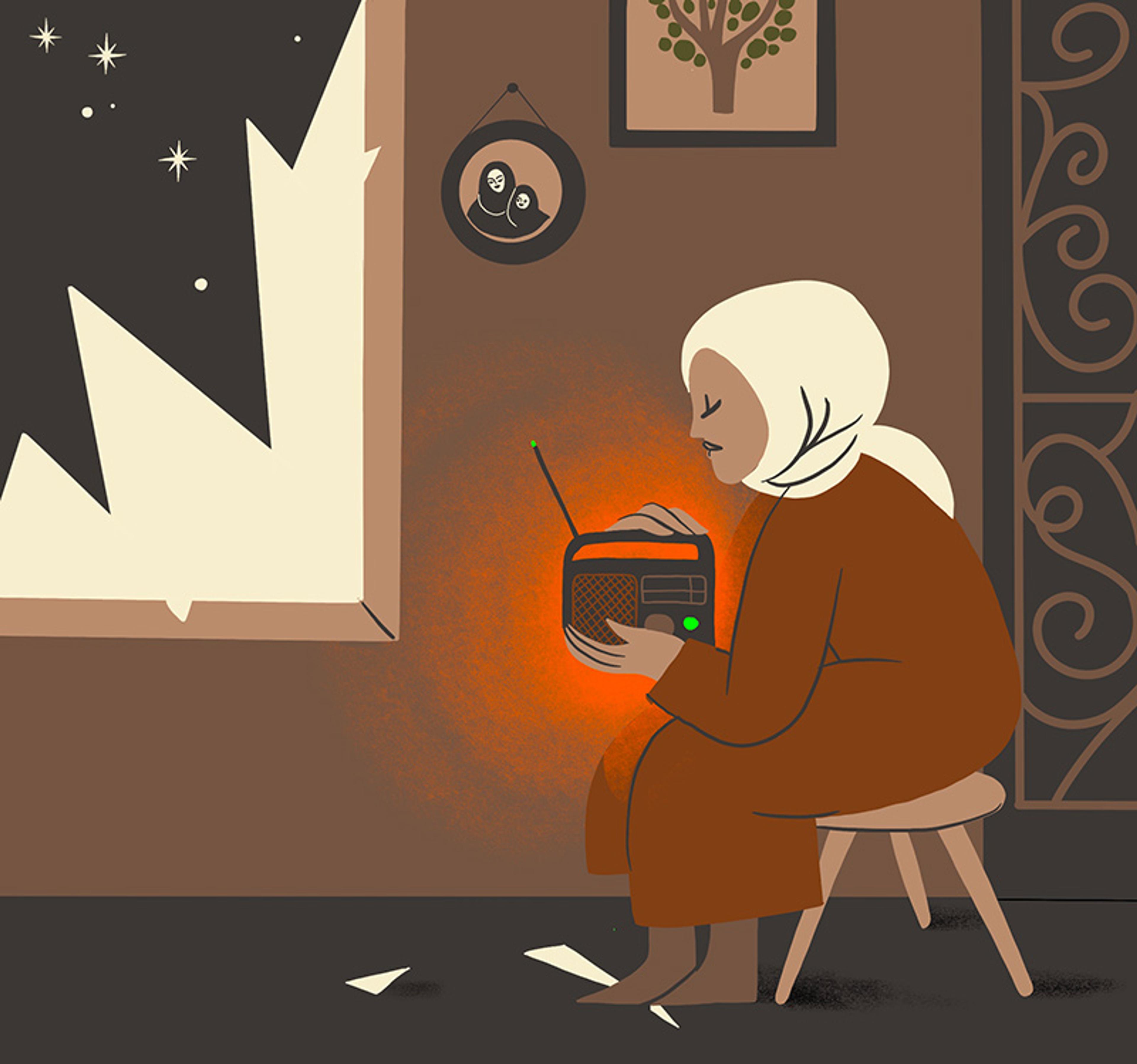
Because of the intensifying civil war (1992-96) back home, and the starvation and draconian laws that befell the country under the first rule (1996-2001) of the Taliban, the ultraconservative movement that emerged in the wake of Soviet withdrawal, countless Afghans, including my relatives, friends and colleagues, were fleeing the country to seek safety in Pakistan and other neighbouring states. Every evening, I would turn on the radio and listen to the BBC and Voice of America for news and political analysis about Afghanistan, hoping to hear that the war had ended so that we could return. But the reports grew only more heartbreaking by the day. The traffic of people only went one way.
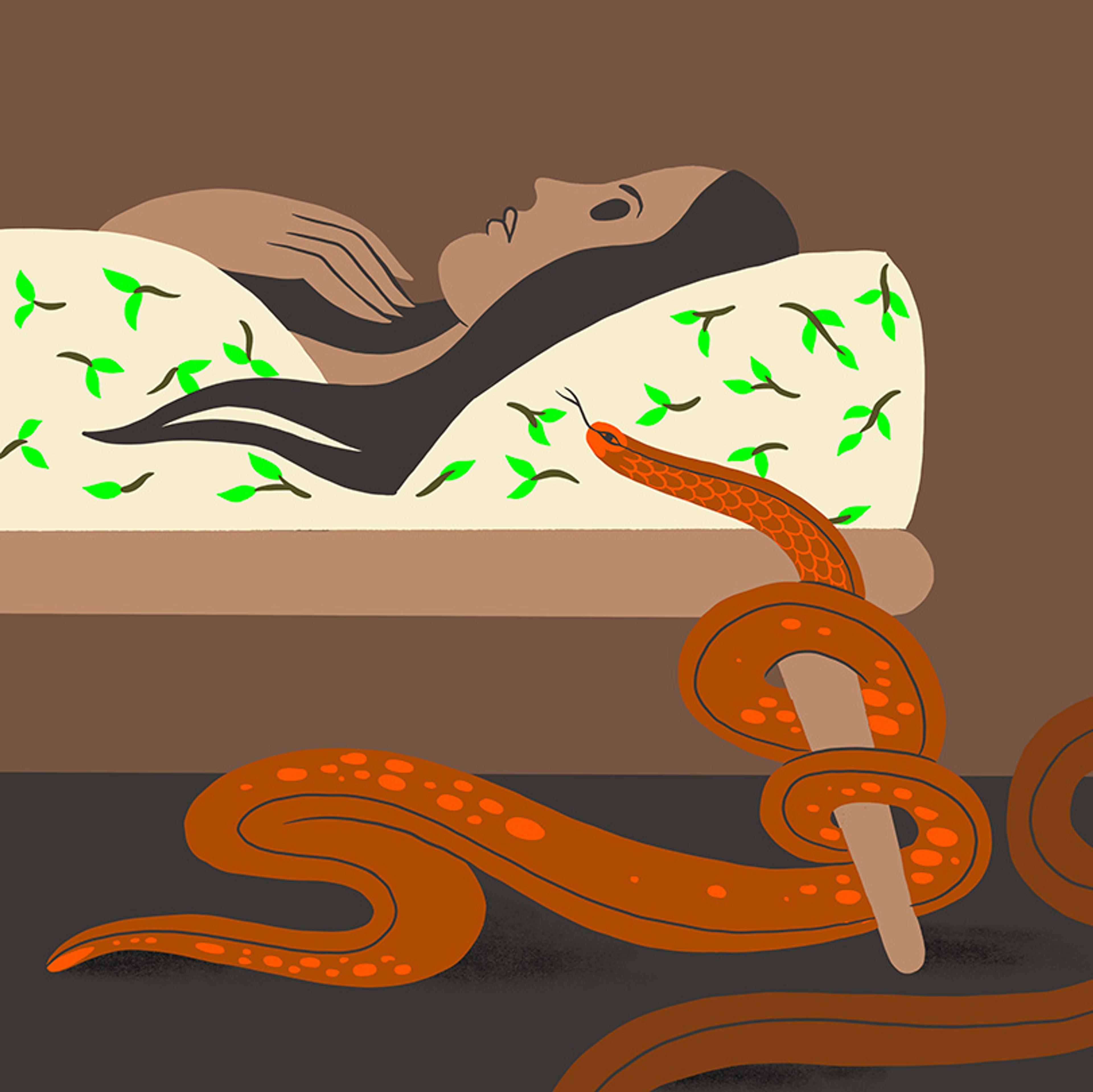
The heat in Peshawar was unrelenting. After the cold, mountainous climate of Kabul, we would feel our skin prickle with sweat each time the electricity went out. We had to contend with snakes, scorpions and all kinds of insects. Red, yellow and grey snakes slithered across our courtyard. Though we slept on raised beds, and though we’d been told that snakes would not climb beds with smooth legs, I could never close my eyes at night. I bought a shovel that always rested against the wall of the courtyard, and twice I managed to kill a snake in the yard of our rented house. For all that, we were relatively comfortable in terms of food, water and basic services. But what gnawed at us from within, like ants, was the restlessness of our souls. In the evenings, when the whole family gathered, a strange wave of sadness would sweep over our hearts.
Then came the attacks on the World Trade Center and the Pentagon of 11 September 2001, which was a deus ex machina for so many displaced Afghans, since the US-led invasion that overthrew the Taliban regime meant at least that we could return home. No one imagined that foreign forces would continue fighting in Afghanistan for the next 20 years.
Arriving back in Kabul, we found our apartment in ruins. Its rooms were blackened with smoke, and its windows broken; the plumbing was utterly destroyed. We had to repair everything. For weeks, we slept on a carpet on the floor, camping in our own home. Even with this hardship, life was beautiful. I planned to enrol my children at school, then get to work (the organisation I worked for in Peshawar had also relocated home). There were no explosions or gunshots. Could life get any better? Then one night as we were about to doze off, we heard a loud explosion nearby. The window of our guestroom fell to the floor, shattering into pieces. It turned out the bomb had been planted in a women’s bakery opposite the Ministry of Public Health. We wondered if we’d been too hasty in returning, but the truth was we had no choice. And so a pattern was set, once again. We would try to live our lives as normally as we could against a backdrop of fighting.
In 2004, almost everyone I know voted in the presidential election, high on hopes of democracy, though it soon became clear that government corruption was rife. Government lands, properties and assets were plundered, and international aid intended for the country’s reconstruction was diverted into the pockets of those in power. Ironically, things were so much better for women, who were allowed back into education and employment again. Private educational institutes, universities, educational centres and public infrastructure were built, and women had a role in society. At the same time, the fighting also grew increasingly fierce, with NATO and US forces trying to rout out Taliban fighters, while the Taliban responded with suicide attacks. There were large numbers of military and civilian casualties every day. I now had two more daughters to take care of at home, and balanced my time between family life and work. I kept my head down and got on with things, even as my hopes for the country were fading.
Now I was writing radio plays drawn from life, and travelling around the country meeting people, especially girls and women, and listening to their personal stories and problems. I loved the work and found it challenging. I met so many kind and honest women in the countryside and gathered their stories. Many of them suffered from poverty, domestic violence, loveless marriages, childhood marriages, exchanged or forced marriages, health problems, landmines, and a war that never abated.
Roadside bombs and suicide attacks by the Taliban were an occupational hazard, and the roads I travelled were extremely dangerous. On one occasion, we stopped in the Surobi District to rest. As I washed my hands in a stream, there was a powerful explosion. I stood up and saw a herd of sheep and goats in the distance, dust and smoke rising among them. Our driver ran towards us saying the herd had hit a landmine and two sheep had been killed. In spite of these risks, I visited places where women and girls gathered, such as schools and health clinics, and sometimes I ventured into their homes.
I’ll never forget one young woman of 20 who lived in the Shakardara District in the north of Kabul. She invited me into her house, and I learned that she had been married to her cousin for eight months. ‘We have lived in the same house, with our rooms next to each other, and played together since childhood,’ she said. ‘After my uncle was killed in a rocket attack, my father married his widow, and no matter how much I protested this marriage, saying that I regarded him as my brother and that I was not happy, my father only said that all girls become happy after marriage. I tried to commit suicide, but my family found me and took me to a hospital, where I was saved. To this day, I refuse to talk to my father. I don’t even say hello to him when I see him. I have no idea what to do.’ The girl was six months pregnant.
I hoped that my plays would help support women to overcome their challenges
Another young woman I met in a clinic in the Istalif District had heard our programme on the radio and was interested in talking with me. She said the radio used to keep her from boredom but that it was now locked away in a box by her mother-in-law and she was no longer allowed to listen to it. Another girl I met on my travels told me that her father forbade her from going to school. There was no electricity in rural areas, so people couldn’t watch television. Yet almost every house had a radio and people would listen to the news on it. I even met rural women who listened to radio dramas believing that the characters in them were real people.
These stories that I gathered became the basis of my radio plays. I consulted with psychologists and sociologists and other women to explore possible solutions to the issues I kept hearing about, and hoped that my plays would help support women to overcome their challenges.
When I look back on my life, I feel a deep sense of joy. During the years when I still had some freedom, I spent my time teaching women about vital issues affecting their lives. I stood by them and supported them, while at the same time encouraging the idea that unity is essential when fighting for basic rights, including the right to education. If my radio plays gave even a few girls the courage to object to a marriage they did not choose, I would consider that a great achievement.
After the Taliban regained control of Kabul in August 2021, it was as if the clock had been rewound. The city was in a state of terror. On 15 August, my two youngest daughters sat their mid-terms at school, and instead of the usual short walk home it took them five hours. Waiting for them felt like an eternity. The situation quickly deteriorated. Government employees and Afghan allies of the US and NATO mobbed the airport. All offices were closed, and then the schools. After a short time, the Taliban announced that boys’ schools could reopen but that the girls’ schools would remain closed – a ban that continues to this day. My daughters were banned from taking the university entrance exam. I felt their pain. They had reached university age, set goals for themselves and were thinking about which faculty they would choose, but now the doors to higher education were closed to them.
When offices eventually reopened, female and male employees were separated and assigned to work in different rooms. Women were forced to wear black hijabs. Then in December 2022 the Taliban effectively banned women from working altogether. Our office told us not to bother coming in. Secretly, I continued to work from home, but there I had the problem of not having electricity or a computer or other necessary equipment. When the electricity finally came on, it would be 11 or 12 at night. By that time, my lips wouldn’t touch each other from yawning so much. I’d splash cold water on my face to keep myself from falling asleep. Then I would start worrying that the electricity would be out again before I could finish my work.
It’s been four years since the Taliban returned to power. In this time, they’ve issued numerous decrees. Afghan girls have been banned from education. Women’s bathhouses have been closed. Women are not allowed in parks, or to travel without a mahram, or male relative as a guardian, and they’ve been banned from taking part in sports. Women are no longer able to obtain a driving licence. Their work is limited primarily to healthcare and primary education, and they must cover their entire bodies in black veils or blue chadoris.
I was lucky. I managed to complete my education and enjoy a long professional life, but I worry for my daughters and for the daughters of my homeland, now denied these basic human rights. I fear for the future of this country. And yet there is hope. Afghan girls are not sitting idly by. When I walk the streets of Kabul, I see many girls in black hijabs carrying backpacks full of books: they are determined to get an education by any means necessary. When I see the spring in their step and the confidence in their stride, I feel inspired to envision a developed, prosperous and self-sufficient Afghanistan brought to life in the not-too-distant future under their leadership.
This piece was made possible by the Bagri Creative Writing Award, a partnership between Untold Narratives and the Bagri Foundation to support Afghan women writers in the Paranda group.