Listen to this essay
29 minute listen
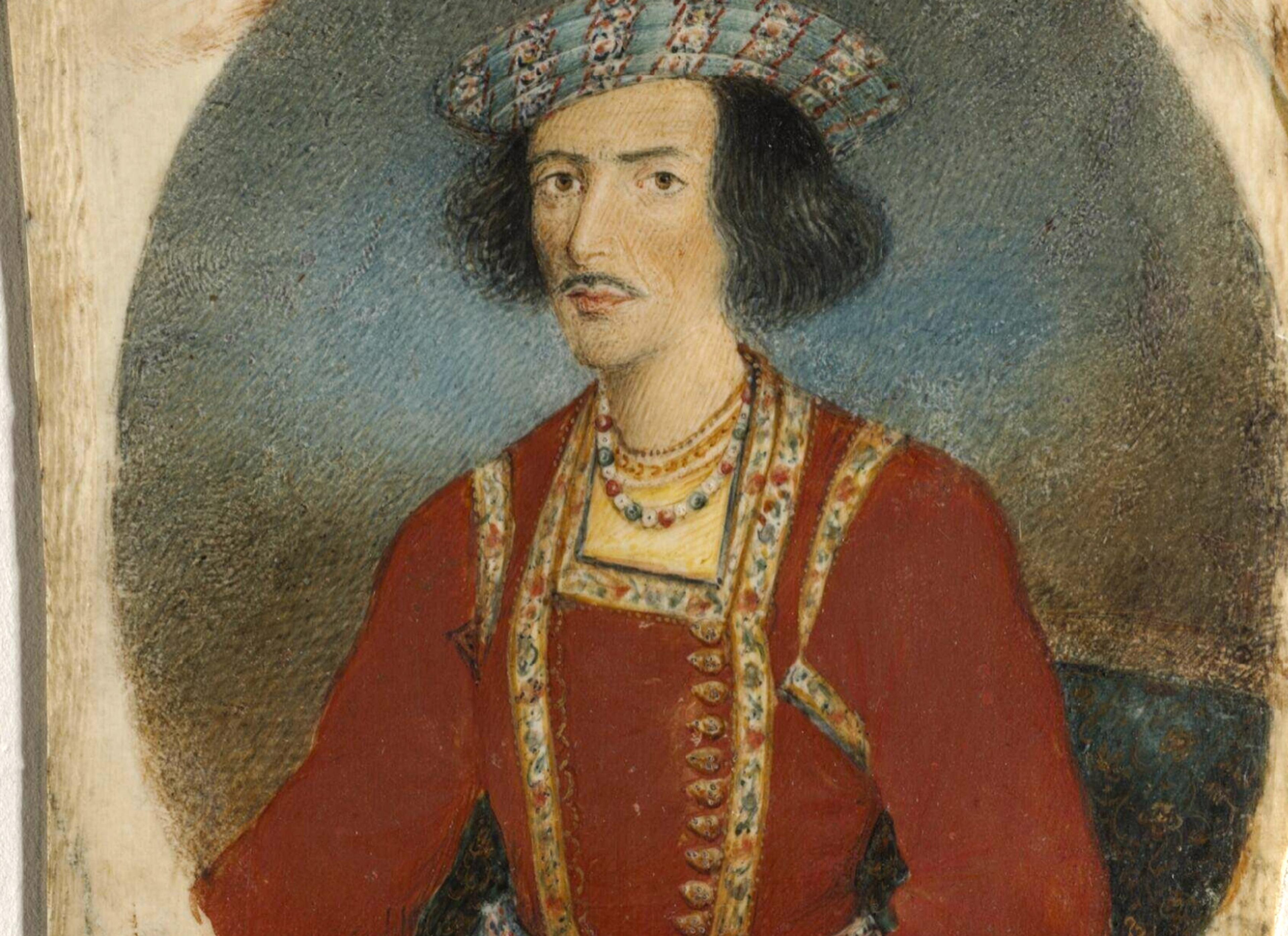
In 1831, a man in a long cloak stepped off a ship in Liverpool. He had no official title the British recognised, no position in the colonial administration, and no invitation from the Crown. His name was Rammohun Roy. He came from Calcutta, sent not by the British Empire but by the weakening Mughal court in Delhi. His stated mission was to represent the ageing emperor Akbar II in London. But Roy brought something else with him, something quietly radical. Among his papers was a detailed document on how India was governed under British rule, and how it might be governed more justly. Its title: Exposition of the Judicial and Revenue Systems of India.
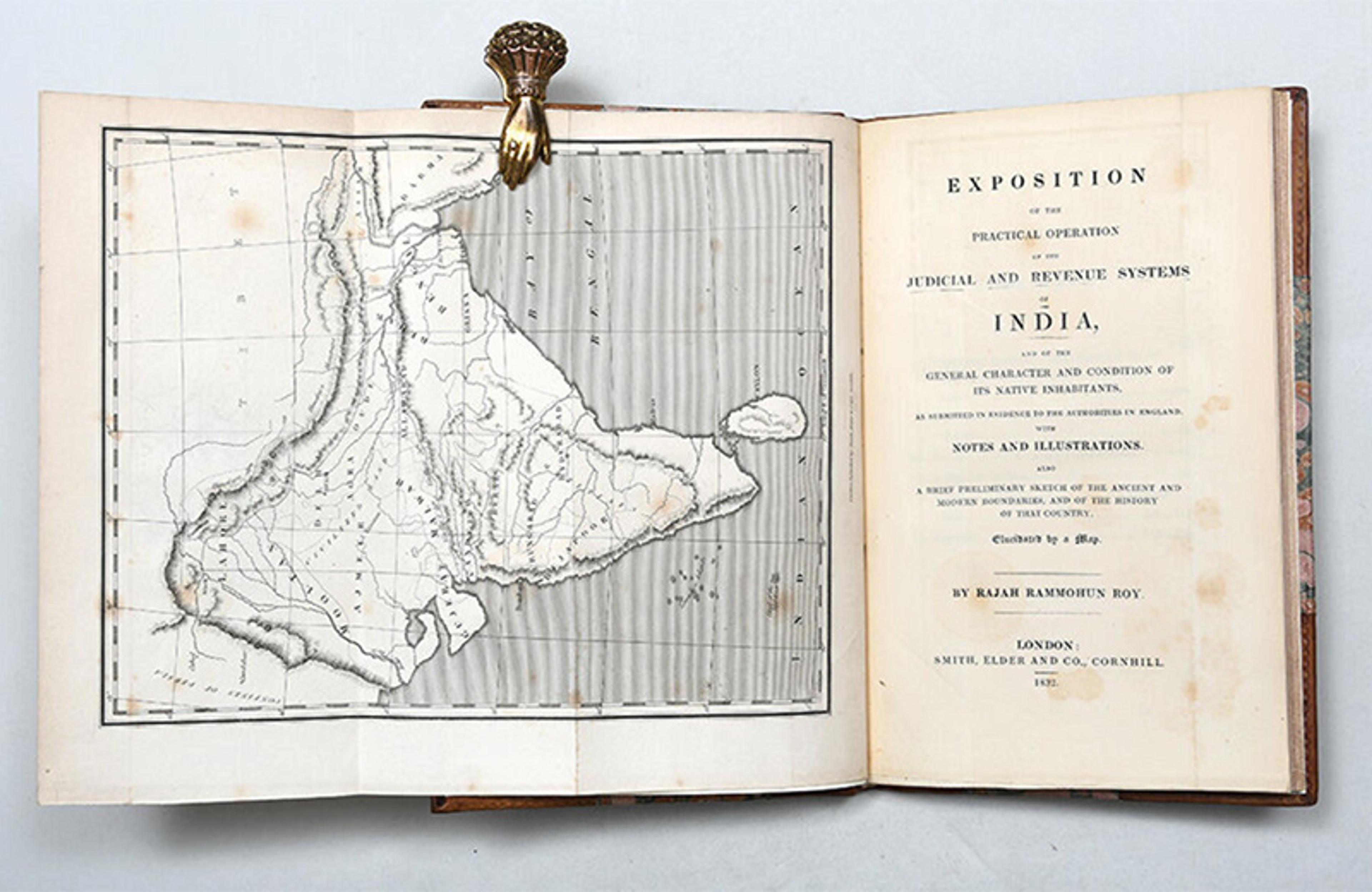
Exposition of the Judicial and Revenue Systems of India (1832) by Rammohun Roy. Courtesy Peter Harrington Rare Books
The moment was significant, even if few recognised it at the time. Here was an Indian thinker not merely demanding reform but arriving in the imperial metropole with his own diagnosis of empire’s ethical failings. His cloak may have seemed out of place in the foggy streets of London, but his message was piercingly modern: power must be near to be fair. His presence in England wasn’t just diplomatic: it was symbolic. Roy was stepping into the heart of empire not merely to protest, but to propose. As he would argue, critique from a colonial subject wasn’t a contradiction; it was a form of ethical intervention. And perhaps more radically, he believed that Britain had something to gain by listening. Roy did not call for rebellion, but for reform grounded in empathy, knowledge and responsibility. What he offered was a vision of rule based not on domination, but on ethical presence.
To understand Roy’s radicalism, one must first recognise the peculiar nature of the empire he addressed. The British East India Company governed not as a typical colonial state, but as a multinational corporation with a private army. Its rule was bureaucratic, extractive and often unaccountable. In this world, Roy’s voice stood out not simply because it was Indian, but because it was reasoned, comparative and universalist. He spoke the language of rights and governance, of moral duty and political proximity: a language the British claimed to understand, and that Roy used to hold them to account.
On the surface, the Exposition looked like a dry report. But inside was a surprising claim: the greatest problem with British rule in India wasn’t just oppression or corruption. It was distance. Courts operated in languages that ordinary people couldn’t understand. Administrators rarely stayed long enough in one place to learn how it worked. And decisions were made far away, in Calcutta or London, by people with no connection to the lives they affected.
To understand why Roy believed these things, we need to understand the extraordinary life that shaped him. Born in 1772 into a well-to-do Brahmin family in Bengal, he was educated in a variety of intellectual traditions that few of his contemporaries had access to. His early studies in Persian and Arabic took place in Patna, where he was introduced to Islamic theology, logic and jurisprudence. Later, in Varanasi, he studied Sanskrit texts, absorbing the metaphysics and ritual knowledge central to Hindu philosophical traditions. He also engaged with Jain and Buddhist ideas and, over time, became deeply interested in Christian theology and Enlightenment rationalism.
This unique education didn’t just make Roy intellectually curious – it made him comparative. He was always seeking correspondences between traditions: what did Islam and Hinduism say about the moral duties of a ruler? How did the Christian notion of the kingdom of God relate to Persianate ideas of justice? How did Western liberalism align, or conflict, with indigenous notions of ethical conduct? These weren’t abstract questions. Roy saw them playing out in the colonial world around him.
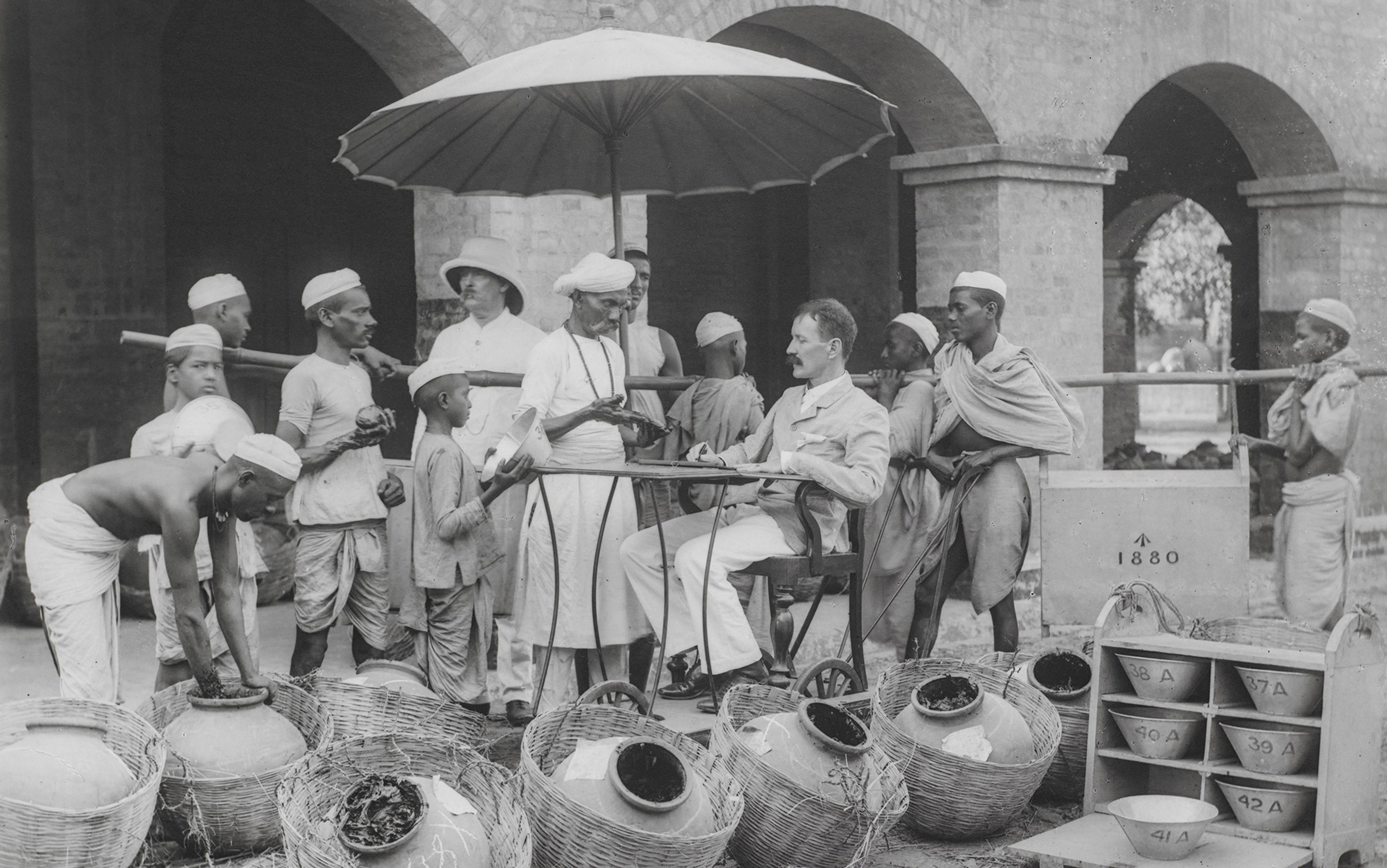
From 1803 to 1814, he worked for the East India Company in various administrative roles – first as a munshi (a clerk or secretary), then as a revenue officer, and eventually as a translator and Persian-language expert. He was posted in towns across Bengal and Bihar, and these experiences formed the crucible of his political thinking. He observed how policies devised in distant boardrooms were implemented, often clumsily, on the ground. He witnessed how local knowledge was routinely ignored, and how language barriers created confusion and alienation.
The British governed by abstraction, by rules, reports and statistics, rather than by presence
Roy’s familiarity with the colonial administration was not superficial. He knew its paperwork, its personnel, its practices. He was, in effect, a part of the machinery. But he was also quietly and sharply critical of it. He saw how easily the system slid from bureaucracy into authoritarianism – not through grand acts of oppression, but through a thousand small instances of disregard.
It was these experiences that led Roy to argue, later in London, that colonial rule suffered not just from injustice, but from estrangement. The British were ruling India, but they did not know it. They governed by abstraction, by rules, reports and statistics, rather than by presence. Roy believed this was not just inefficient; it was unethical. And it was this ethical critique, grounded in his personal encounters with power, that gave the Exposition its quiet force.
Nor was Roy’s criticism confined to British officials. He also called upon Indian elites to rethink their role. Too many, he believed, had accepted the rewards of collaboration without the responsibilities of critique. Roy wanted a different kind of engagement – one that would hold power to account from the inside, using the tools of law, reason and moral persuasion.
In many ways, Roy’s life up to 1831 was preparation for the arguments he would make in England. He had spent three decades navigating multiple worlds: Persian and Sanskrit, Mughal and British. The Exposition was the culmination of that journey. It was not a cry from the margins. It was a challenge from someone who had seen the system from within, and who wanted it to do better. His proposal was simple but bold: rulers should be present, visible, and answerable to those they govern. Power should not float above people’s lives; it should live among them.
Roy’s mission to England was, at least formally, as the emissary of the Mughal emperor Akbar II. By that time, the Mughal dynasty, once the most formidable imperial power in South Asia – had become a shadow of its former self. Its territorial reach was minimal, its treasury depleted, and its court largely symbolic. Yet, for Roy, that symbolism mattered. The emperor might have been politically diminished, but he remained, in Roy’s eyes, a sovereign figure whose legitimacy derived not from conquest or commerce, but from an older, morally infused conception of rule.
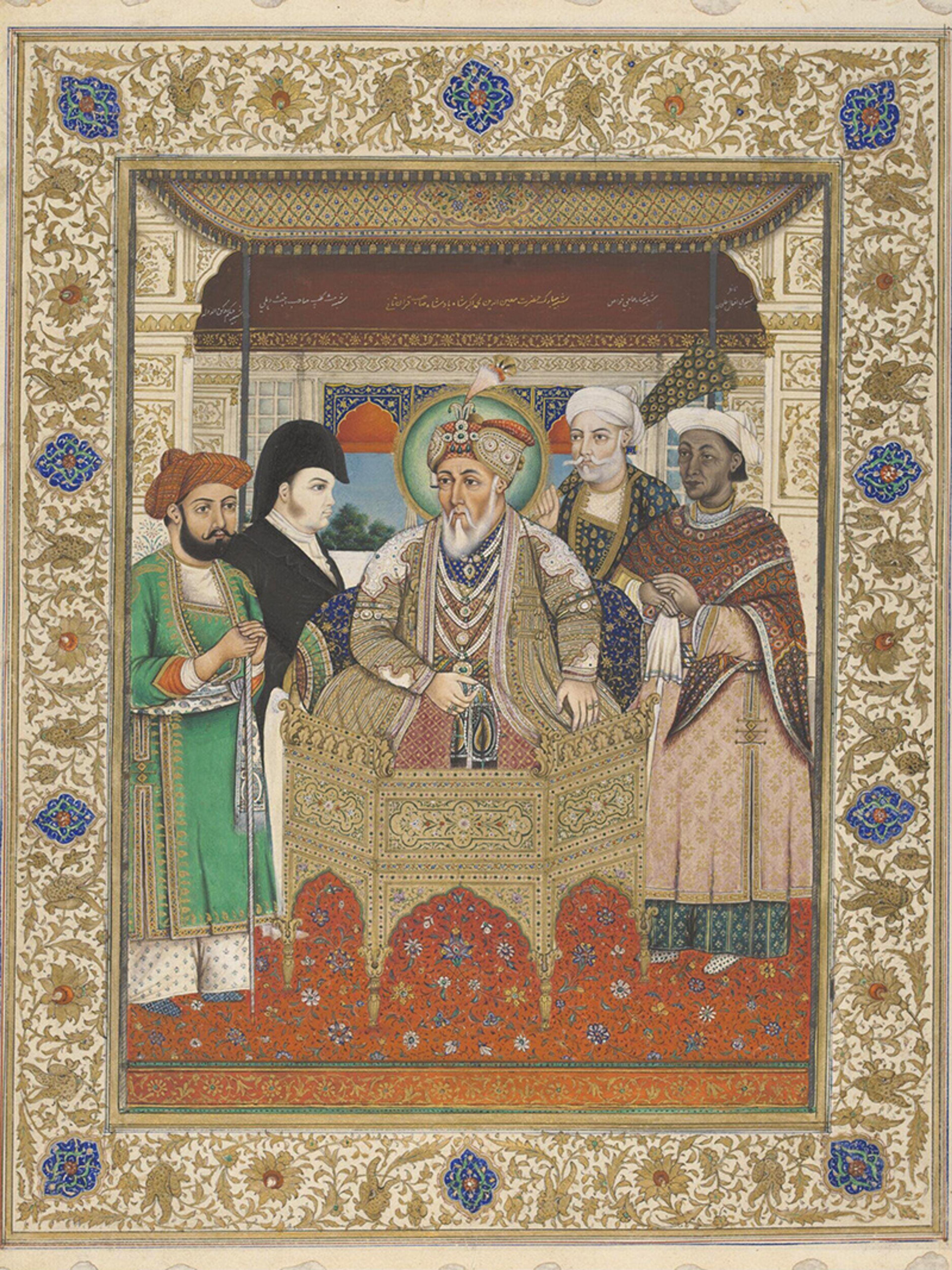
Company painting of Akbar II with Sir Charles Theophilus Metcalf and court dignitaries, c1825. Courtesy the V&A Museum London
This connection was more than ceremonial. Roy had cultivated ties with the Mughal court over several years and was conferred the title of Raja, a move that British officials privately mocked but could not entirely dismiss. His diplomatic mission to England was also a subtle act of political imagination: an attempt to revive the ethical memory of Indo-Persian kingship within the corridors of imperial power. In carrying the voice of the emperor to the British Crown, Roy was insisting that India’s political traditions had not been erased, they were merely sidelined, awaiting recognition.
Roy’s political vocabulary could speak simultaneously to the emperor’s court and to the British parliament
Roy’s Mughal affiliation also revealed the layered and overlapping sovereignties of early colonial India. He did not view indigenous kingship and colonial rule as irreconcilable opposites. Instead, he saw the potential for a fusion: a system in which older norms of justice, responsibility and public ethics (values cultivated in the Persianate courtly tradition) could temper the utilitarian logic of the East India Company. On this view, the Mughal court was not a fossil but offered a way to remind the British that power without legitimacy is fragile, and that legitimacy is not simply a function of military force or administrative reach.
In his writings, Roy often staged this synthesis. The Exposition is filled with references to English law and Enlightenment ideals, but its moral cadence is unmistakably shaped by Persianate ethical thought. Concepts like justice, proximity and ethical accountability – common in Islamic political writing – inform his ideas. Roy did not abandon these traditions when he wrote in English. He translated them. And in doing so, he created a political vocabulary that could speak simultaneously to the emperor’s court and to the British parliament.
To the British public, Roy’s Mughal ties might have seemed quaint, even anachronistic. But for Roy, they offered a platform from which to issue a critique. His journey to England was thus layered with intent. It was not only a petition on behalf of a declining monarch. It was a declaration that India’s political voice could still speak for itself, not in defiance, but in dialogue.
The Exposition, published in London in 1832, is a remarkably grounded critique of British administration in India. Rather than the language of revolution, Roy speaks of reform, precision and moral responsibility. The document is divided into several sections that detail the flaws of the colonial judiciary and revenue systems.
Roy begins with everyday realities. Farmers pushed into debt due to excessive tax assessments. Legal processes that bewildered ordinary people because proceedings were conducted in unfamiliar languages. Judges and collectors who rotated too frequently to understand the local contexts they were meant to oversee. The effect was alienation, not just in law but in life. The people governed did not recognise themselves in their governors, and the governors rarely made an effort to learn from the governed.
Roy outlines more than bureaucratic inefficiency – there’s a deeper political problem: a form of governance unmoored from the people it affects. He argued that decisions made in London or by distant Company directors could never be just if they didn’t incorporate local realities and voices. Roy advocated for Indian judges, courts that spoke local languages, and administrative continuity. His demand was not for Indian rule alone, but for a system of accountability rooted in ethical practice and public engagement.
This ethical core, what Roy would have understood through both Enlightenment ideals and Persianate ethics, insisted that governance required familiarity, attentiveness and moral clarity. He called not for the rejection of bureaucracy altogether, but for its reform. He believed that a government might still be legitimate if it was structured to listen, respond and explain itself. But such responsiveness required what he called domiciliation: power that lived where it governed.
Ethical governance could be built if Indian and British officials committed themselves to the people they served
In making this argument, Roy anticipated one of the great critiques of modern administration – that it becomes impersonal, procedural and aloof. Long before Max Weber or later theorists of bureaucracy, Roy observed how distant governance often transforms justice into ritual, law into jargon, and accountability into empty routine. His Exposition is filled with illustrations of these dynamics, not theoretical, but deeply empirical.
Rather than merely assert abstract principles, Roy shows how injustice functions on the ground. A farmer is taxed on a mistaken assessment and loses his land. A litigant attends court for months without understanding a word spoken by the judge. A village waits years for an official to arrive to settle a land dispute. Each example becomes a window into the ways a disconnected system can do violence, not loudly, but daily. Roy’s approach here was distinctively bureaucratic, even procedural. Yet it carried a sharp political edge. He was less concerned with abstract denunciations of colonialism and more focused on the granular mechanics of how injustice worked. These weren’t just administrative quirks: they were the machinery of alienation.
And yet Roy remained hopeful. He believed that reform was possible, and that ethical governance could be built if both Indian and British officials committed themselves to the people they served. His critique was born not of ideology but of experience, experience sharpened into moral vision. In many ways, the Exposition was an administrative document. But in Roy’s hands, it became a form of political philosophy: a vision of governance as care.
That is what makes Roy’s Exposition so compelling. More than a relic of colonial policy, it is a dialogue on what power should look like when it is done justly. In an age when data-driven decision-making and bureaucratic rationality are once again under scrutiny, Roy’s work reminds us that the first requirement of good governance is not information, but presence.
Roy’s idea did not emerge from any single intellectual tradition. It was shaped by a remarkable confluence of influences, intellectual encounters and moral commitments. Rather than being the product of one culture or creed, his ethics was braided from multiple traditions, each offering a different vocabulary for justice, responsibility and the purpose of power.
One of his earliest writings, Tuhfat-ul-Muwahhidin (‘Gift to the Believers in One God’), composed around 1803, shows his deep engagement with Islamic theology and particularly the ethical tradition known as akhlaq. In this literature, power is inseparable from virtue; rulers are not simply sovereigns but moral agents accountable to divine justice and social responsibility. Drawing on thinkers like Nasir al-Din al-Tusi, Roy was steeped in a tradition where the king’s first duty was not to expand dominion but to cultivate fairness and moderation.
From Hindu texts, especially the Upanishads, Roy drew a sense of spiritual duty (dharma) and the idea that self-knowledge carried public consequences. The king, in this worldview, was the guardian of cosmic and social order. The justice he administered was not his alone, it reflected the balance of the universe. Roy was particularly drawn to the idea that truth was unified, even if its expressions varied across traditions. This gave him the confidence to seek moral guidance across boundaries. This comparative method was no intellectual game – it was an ethical necessity. Roy believed that moral clarity often emerged at the edges of traditions, not their cores. Good governance had to be multilingual, morally plural and intellectually generous.
Rulers were stewards, not merely administrators, their power a responsibility, not a right
Christianity shaped Roy’s ethics in another way. Through his interactions with Christian missionaries and his reading of the New Testament, Roy came to admire the moral teachings of Jesus – especially the emphasis on compassion, humility and resistance to arbitrary authority. He believed that Jesus modelled a form of leadership that elevated the weak, questioned entrenched power, and refused to separate faith from ethics. Roy did not convert to Christianity, but he found in it a moral clarity that resonated with his own convictions.
Equally significant were the liberal ideas he encountered through his engagement with European philosophy. He read John Locke on governance, William Blackstone on legal rights, and Montesquieu on the separation of powers. These thinkers gave him a language for political accountability, constitutional limits and civil liberty. Rather than merely adopt these ideas, Roy interpreted them through the lens of his multilingual, multireligious education. Where Locke spoke of life, liberty and property, Roy heard echoes of older ideas about justice, responsibility and the ethical character of rulers.
What emerged from this intellectual ecosystem was a hybrid ethics of rule. Roy was not content to be a translator or commentator. He fused his sources into a coherent moral philosophy: one that insisted that rulers were stewards, not merely administrators, their power a responsibility, not a right. And their legitimacy came not from conquest or title, but from their ethical proximity to the people they governed.
Importantly, Roy’s ethics were not abstract. They were meant to guide governance in specific ways. He argued that justice must be comprehensible to its subjects; laws must be intelligible; policies must reflect the lived conditions of those they affect. This meant that language, continuity and cultural knowledge were not mere accessories to administration, they were ethical requirements. A court that spoke in Persian or English while adjudicating the affairs of Bengali villagers was more than inefficient; it was unjust.
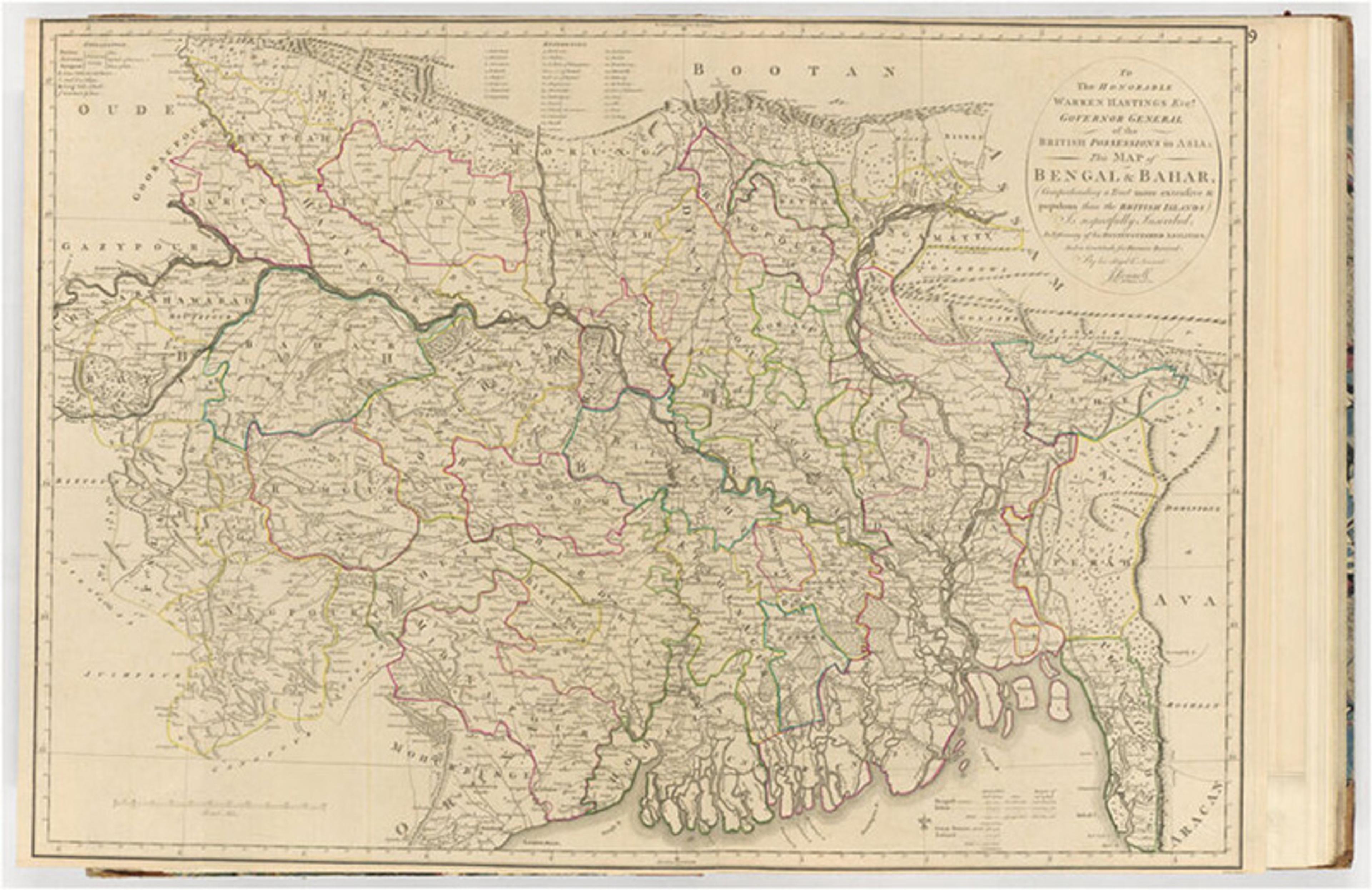
‘A Map of Bengal and Bahar’ from An Atlas of Bengal (1781) by James Rennell, dedicated to Warren Hastings, the governor-general of the British possessions in Asia. Public Domain
Roy’s ethical vision thus combined moral rigour with administrative insight. It asked how one could rule fairly in a multilingual, multireligious and colonised land. And it insisted that the answer lay not in uniform control, but in layered responsibility. The ruler must be close enough to understand, humble enough to listen, and virtuous enough to act.
This capacious moral framework allowed Roy to act as a bridge, between traditions, between empires, between ideas of East and West. In a world increasingly divided between coloniser and colonised, he offered a model of political thought that was both critical and connective. His ethics, drawn from many sources, became a tool to evaluate, and challenge, the new order of empire.
Roy’s political imagination was forged in the overlap between philosophy, politics and public communication. He was not a political theorist in the academic sense, but his writings collectively form a coherent and radical vision: a vision rooted in ethics, shaped by daily life, and articulated through an extraordinary command of multiple intellectual traditions.
He wrote across genres: petitions, essays, open letters, pamphlets and newspaper articles. In Sambad Kaumudi, one of the newspapers he founded, he tackled contemporary issues in a tone that was direct, often satirical, and deeply engaged with the moral and civic life of Bengal. He addressed subjects ranging from widow remarriage to press freedom, and from education reform to judicial procedure. His Bangla tracts brought abstract political principles into the realm of lived experience. Using metaphors drawn from agriculture, family and folklore, he made his case in ways ordinary readers could grasp and relate to. This was no small feat. Roy was crafting a political language where none yet existed.
Even his religious writings had political undertones. When Roy argued for monotheism or defended the rights of women, he was implicitly arguing for an ethical public sphere, one in which reason, mutual respect and moral accountability formed the basis of both religious and political authority. More than simply theological, his critique of idolatry was also a critique of institutional power.
How might political institutions be reimagined to serve people rather than simply manage them?
Roy’s political imagination was shaped by lived experience, not just textual traditions. His knowledge of the inner workings of the East India Company administration gave him a practical understanding of how power functioned on the ground. This realism distinguished him from utopian thinkers. He did not call for the wholesale dismantling of British rule but for a system where power was made ethical through its responsiveness to the governed.
The Exposition, then, must be read as part of this broader project. It is not just a policy document. It is an ethical map. Roy was outlining what governance should feel like to those at its receiving end: accessible, fair, answerable. He was asking how political institutions might be reimagined to serve people rather than simply manage them. His proposals, such as appointing Indian judges or conducting trials in local languages, were grounded not only in administrative logic but in moral reasoning.
Crucially, Roy believed that communication was central to power. His multilingualism was a strategy, not just a skill. He wrote in English, Persian, Bangla and occasionally Arabic, tailoring each message to a different audience. To British officials, he offered reasoned critique in the language of reform. To Indian readers, he offered satire, allegory and moral exhortation. This polyphony allowed him to operate in multiple spheres at once, imperial and vernacular, elite and popular.
His political thought is difficult to pin down precisely because it refuses simple classification. It is liberal in its defence of rights, constitutional in its calls for reform, theological in its moral urgency, and pragmatic in its policy suggestions. Above all, it is grounded in the conviction that proximity, not just of geography but of understanding, is essential to justice.
Roy’s political imagination, then, was both expansive and grounded. It did not dream of utopias; it demanded reforms. It did not romanticise the past or idealise the West; it asked what could be done, here and now, to make power more just. In this, he was a pioneer of modern Indian political thought. And though he rarely used the language of democracy as we understand it today, his work laid important foundations for it: a vision of governance that is ethical, inclusive and accountable to the people it serves.
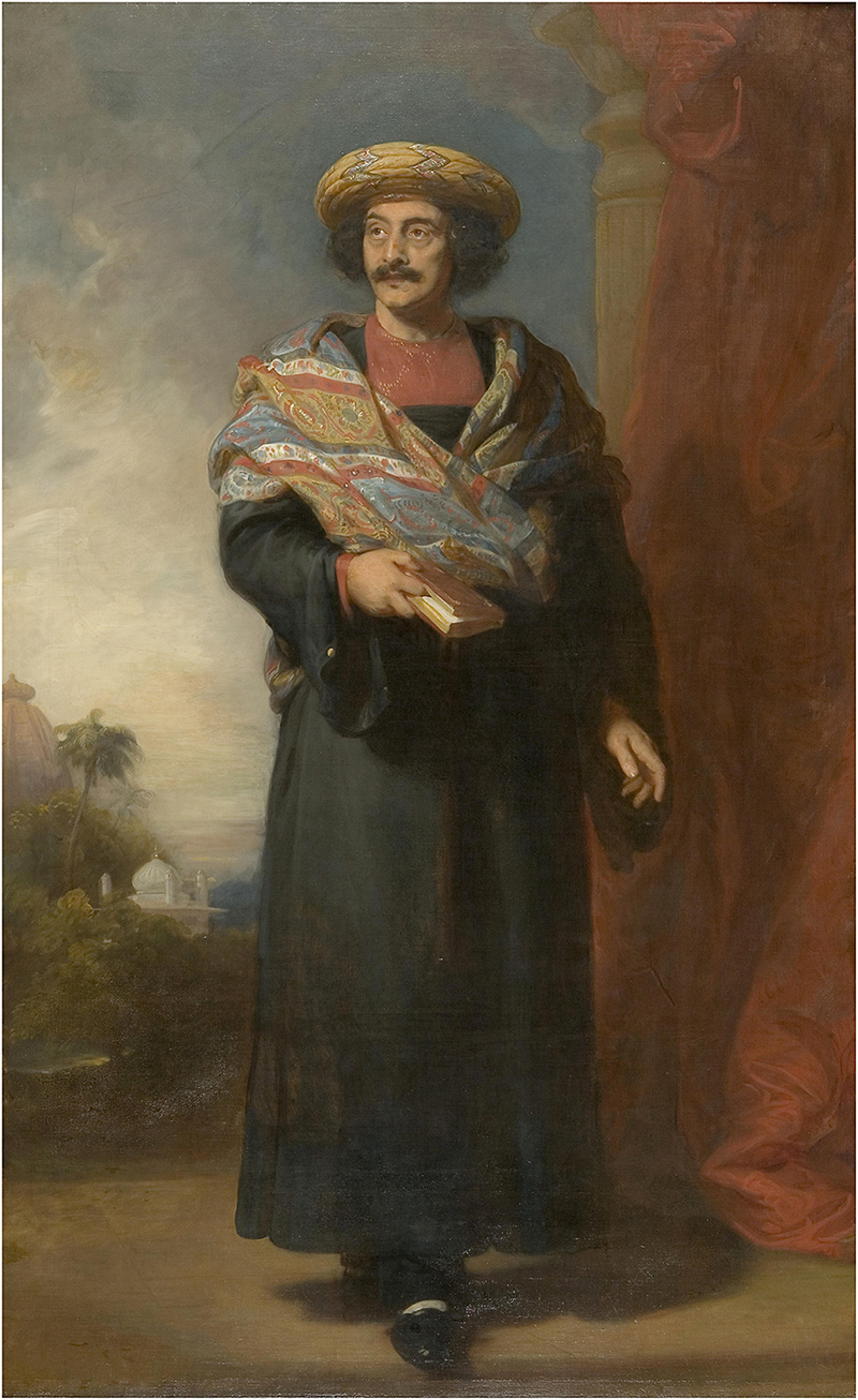
Rammohun Roy (c1832) by Henry Perronet Briggs. Courtesy the Bristol Museum and Art Gallery
When Roy arrived in England, he caused a stir among certain political and intellectual circles. British Unitarians saw him as a fellow traveller in the search for rational religion and ethical reform. Parliamentarians sympathetic to political reform welcomed his insight into colonial governance. Intellectuals such as Jeremy Bentham and Robert Owen were aware of his presence and, in some cases, intrigued by the precision and civility of his arguments. Yet despite this momentary curiosity, Roy remained largely marginal in formal imperial circles, welcomed as a curiosity, perhaps, but not taken seriously as a political equal.
His Exposition didn’t prompt sweeping reform. There was no sudden change in how the East India Company administered justice or collected revenue. But this wasn’t necessarily a failure. The true significance of the text lay in its political gesture, not in its policy influence. Roy demonstrated that critique could come from the colonised, articulated in the idiom of the coloniser, and still reflect a deeply Indian moral vision. His work set a precedent for speaking truth to power, from within the very spaces where that power was presumed to be unquestioned.
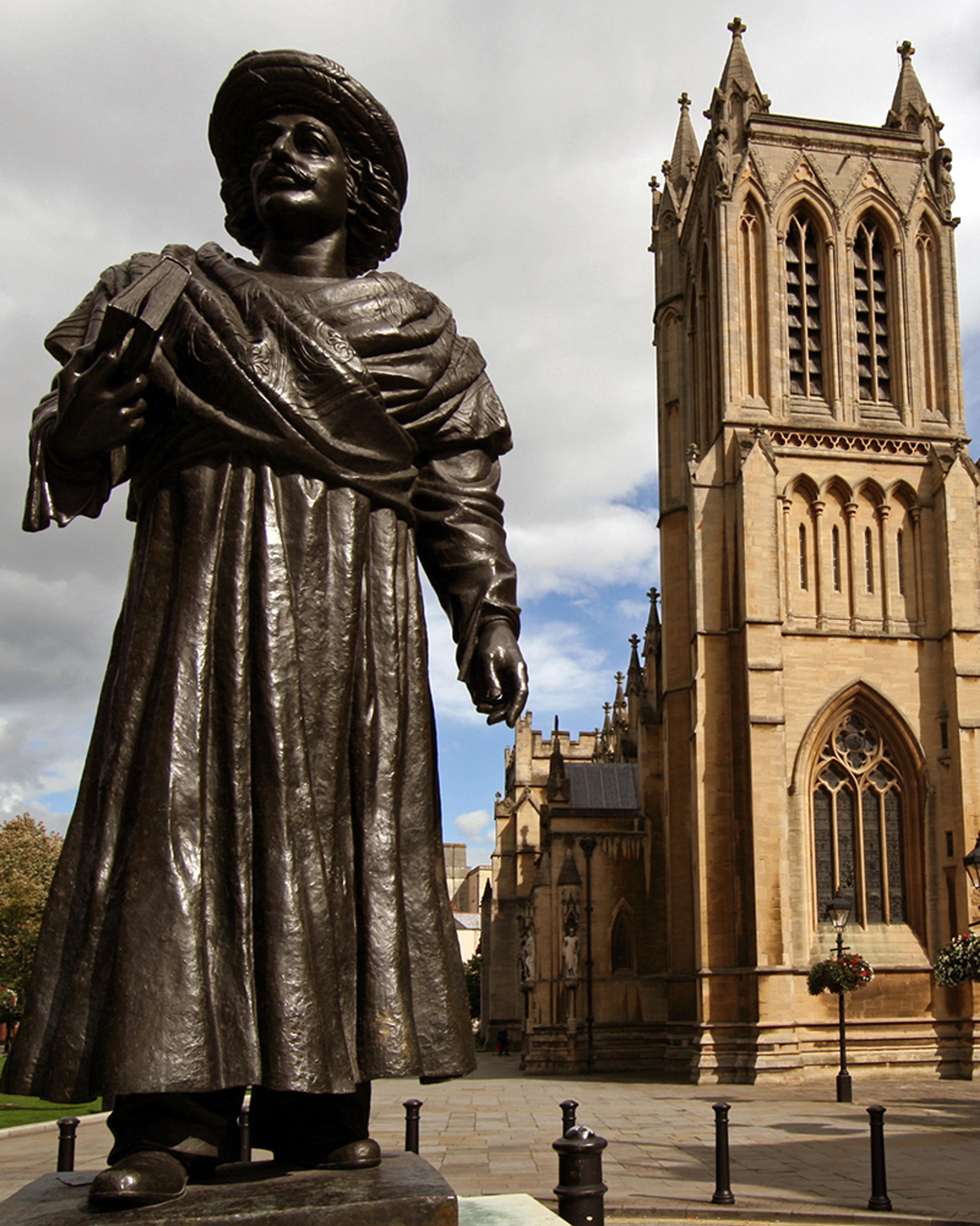
Statue of Rammohun Roy in front of Bristol Cathedral. Courtesy Paul Turner/Flickr

Rammohun Roy’s mausoleum in Arnos Vale Cemetery, Bristol. Courtesy Wikipedia
After Roy’s sudden death from meningitis in Bristol in 1833, his reputation evolved rapidly. In Bengal, he was celebrated as a reformer, remembered for his advocacy against sati (widow immolation), his efforts to modernise Hindu education, and his co-founding of the reformist movement Brahmo Sabha. But as Indian politics grew more nationalist in tone, Roy’s image was simplified: he became either the father of Indian liberalism or a faint outline in the pantheon of proto-nationalist heroes. This often obscured the nuance of his political thought, his careful attention to bureaucracy, his insistence on ethical proximity, and his belief in moral governance as a practice of care, not just control.
He reminds us that administration without understanding becomes violence in slow motion
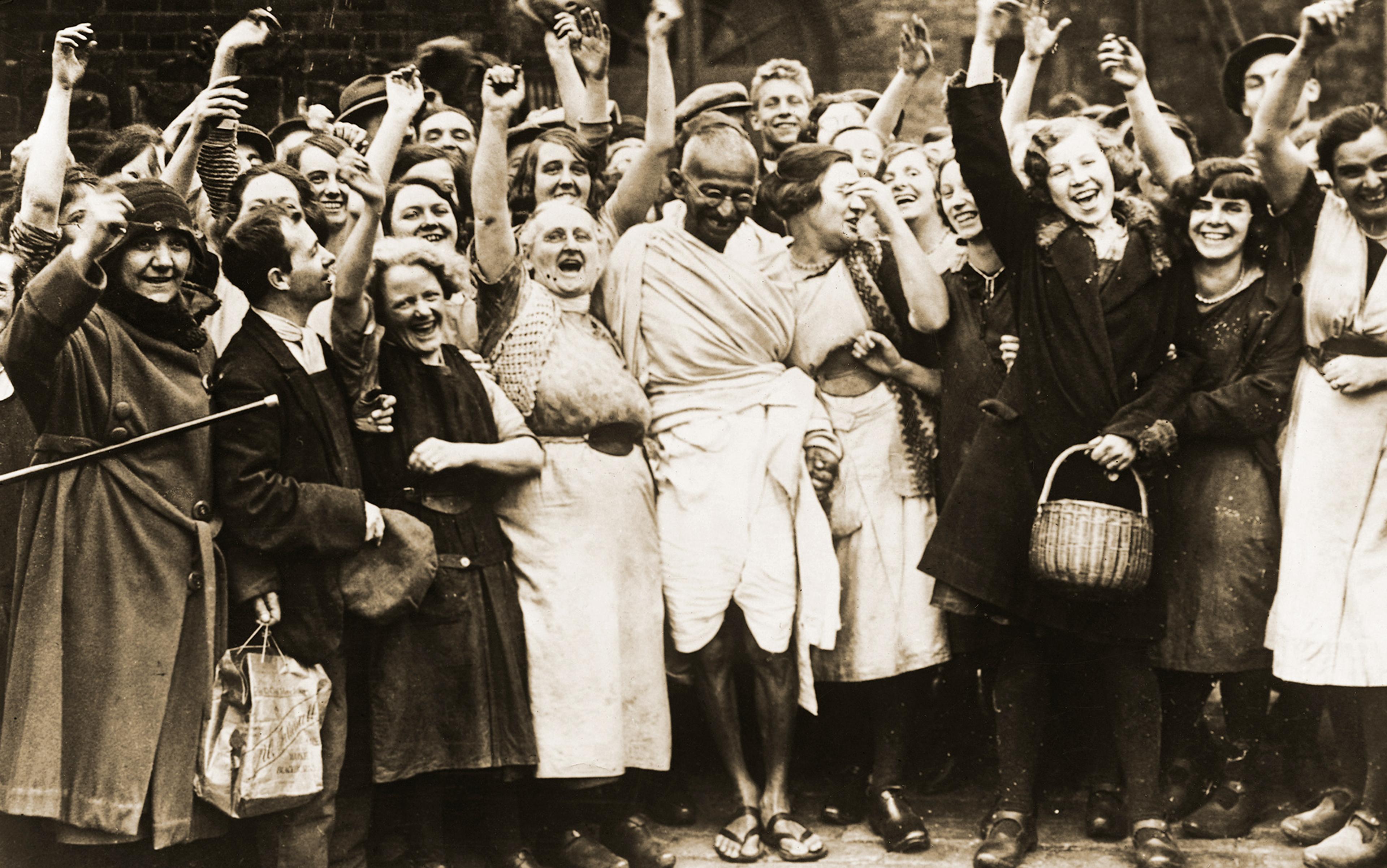
Nonetheless, Roy’s ideas lived on in more subtle ways. Later thinkers like Dadabhai Naoroji, Gopal Krishna Gokhale and even Rabindranath Tagore inherited fragments of Roy’s vision. Naoroji’s economic critique of British rule echoed Roy’s insistence that imperial governance was alienating and extractive. Gokhale’s moral tone, his stress on responsibility and gradual reform, bore traces of Roy’s ethical method. Even Gandhi, in his emphasis on decentralisation, civic proximity and spiritual politics, echoed Roy’s belief that power must dwell among the people to be just.
Roy’s ideas also influenced constitutional thinking in the 20th century, though indirectly. The emphasis in India’s founding documents on representation, transparency and ethical statecraft parallels Roy’s vision of governance as moral responsibility. He had planted the seed for a conception of the state that was not merely procedural, but principled – rooted in proximity, humility and accountability.
In our present moment, Roy’s thought feels uncannily timely. As global governance grows more abstract, as decision-making becomes automated, centralised and emotionally disengaged, Roy’s insistence on ethical presence is a potent reminder that power without presence becomes alienation; that administration without understanding becomes violence in slow motion; and that justice, in the end, is not only a question of law or efficiency, but of nearness.
Roy may not have lived to see a decolonised India. But he helped imagine one in which rulers were moral agents among their people, not distant authorities.
Roy died far from home, but his intellectual legacy lives on in the questions he raised. What makes authority just? How close must a government be to be ethical? Can institutions behave not just efficiently, but morally?
His answers were consistent, not simplistic. Proximity matters. Language matters. Accountability matters. These are not abstractions. They are the daily conditions of dignity and justice. For Roy, governance was not just about power, it was about the ethical form that power takes when it comes into contact with people’s lives.
He believed that even the colonial state could be redeemed if it learned to govern not from a distance, but from within
In the Exposition, Roy was not asking for an Indian takeover of British institutions. He was asking for something more foundational: that governance, to be legitimate, must be intelligible, humane and grounded in ethical awareness. This was not merely a critique of British rule. It was a blueprint for any system of power, imperial, democratic or otherwise, that hoped to endure with integrity.
In a world increasingly defined by distance, between citizen and state, between policy and experience, between law and justice, Roy offers a reminder that good government is not only a matter of laws or statistics. It is a matter of presence. His insistence that rulers live among the ruled, listen to them in their own languages, and remain morally accountable to them, is a principle that transcends his time. In his most optimistic moments, Roy believed that even the colonial state could be redeemed if it learned to govern not from a distance, but from within. His work suggests that proximity is not just spatial, but ethical. It means listening across difference, and governing with the humility that no law is just unless it is understood, felt, and answerable.
We live now in an age of data-driven governance, automated decisions and vast bureaucracies. The state has grown more capable, but also more impersonal. In such a moment, Roy’s vision feels radical again. Not because it is grandiose, but because it is intimate. He did not ask to be remembered. He asked, insistently, that power be visible, proximate and accountable. That vision still matters. And perhaps now more than ever, it deserves to be read not as a relic, but as a provocation: a call to bring ethics back into the everyday workings of governance.
Supported by a grant from the Open Society Foundations.